Allergy Food Panel 1 (by Phadia)
Testing 10 Parameters
- Fasting Not Required
- Sample Type: SERUM SPL
Rs. 6450
| Conducted at | Thyrocare Labs |
| Lab Accreditation | CAP, NABL, ICMR, NGSP, ISO |
| Method | MicroArray |
| Technology | ELISA |
| Supervision | Dr. Prachi Sinkar MD (PATH), DR. Caesar Sengupta MD (MICRO) |
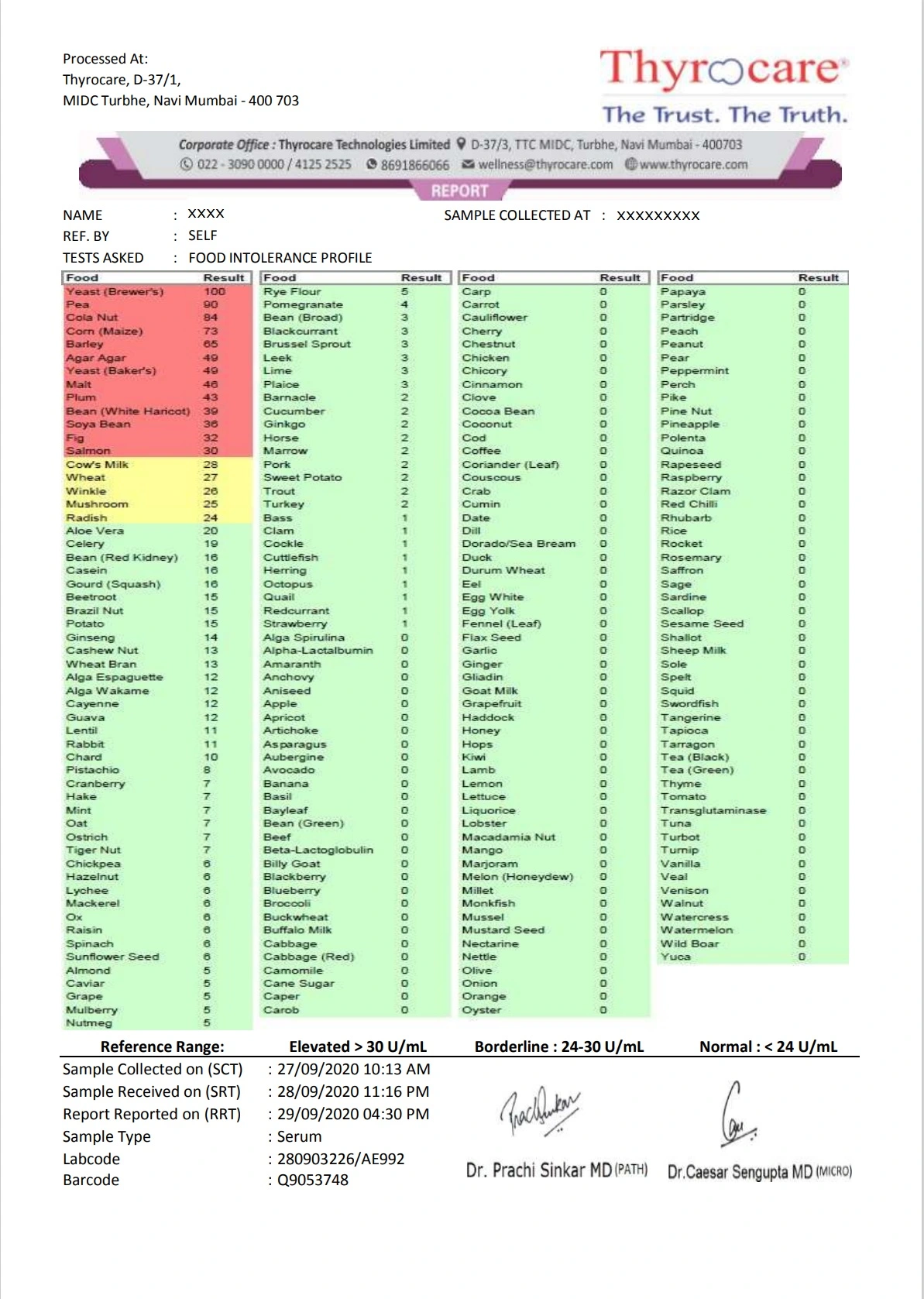
| Normal Range | < 24 U/mL |
| Borderline Range | 24-30 U/mL |
| Elevated Range | > 30 U/mL |
| Results | Highly Specific |
How do I interpret the Food intolerance test results?
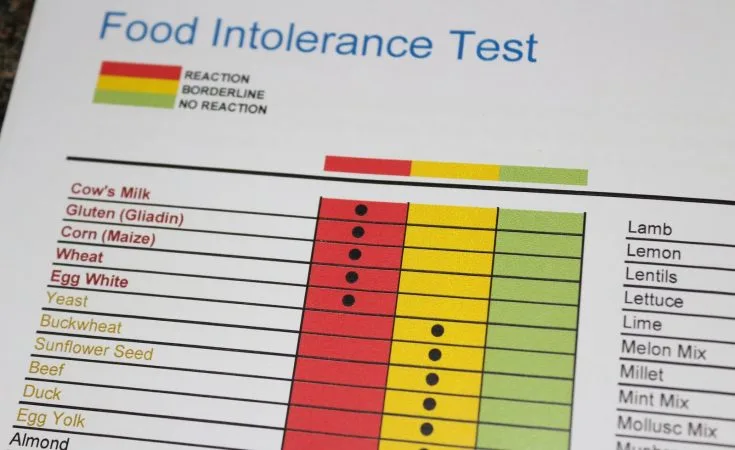
The test results show a list of foods categorized into 3 parts:-
1. The foods listed in the red color are the foods you need to eliminate from your diet. These are the foods that cause intolerance at the highest level.
2. Foods listed in the yellow section are the foods that you can include occasionally or in small doses in your diet.
3. The green section of the report includes a list of food that you eat regularly and that causes no intolerance at all.
| Conducted at | Thyrocare Labs |
| Lab Accreditation | CAP, NABL, ICMR, NGSP, ISO |
| Method | MicroArray |
| Technology | ELISA |
| Supervision | Dr. Prachi Sinkar MD (PATH), DR. Caesar Sengupta MD (MICRO) |
| Normal Range | < 24 U/mL |
| Borderline Range | 24-30 U/mL |
| Elevated Range | > 30 U/mL |
| Results | Highly Specific |
How do I interpret the Food intolerance test results?
The test results show a list of foods categorized into 3 parts:-
1. The foods listed in the red color are the foods you need to eliminate from your diet. These are the foods that cause intolerance at the highest level.
2. Foods listed in the yellow section are the foods that you can include occasionally or in small doses in your diet.
3. The green section of the report includes a list of food that you eat regularly and that causes no intolerance at all.
Food intolerance happens when the digestive system is unable to digest certain foods due to a lack of digestive enzymes. In this situation, the body produces IgG antibodies and causes inflammation. This inflammation causes disturbance in digestion and as a result, symptoms such as diarrhea, bloating, gas, and abdominal pain occur. You can get the intolerance checked by doing a food intolerance test at the earliest to remove the problem foods from your diet and improve your gut health. There are various kinds of intolerance that occur among people of all ages such as gluten intolerance, lactose intolerance and intolerance of seafood, nuts, etc.
There are various foods that are responsible for causing intolerance in the body. You can develop a sudden intolerance to any food which is otherwise healthy. This sudden intolerance can take some time to show in symptoms but usually, it causes digestion-related problems such as nausea, vomiting, IBS, etc. Foods that commonly cause intolerance are given below:
When someone develops an intolerance towards some foods, their digestive system reacts in response and causes problems such as diarrhea, bloating, gas, vomiting, etc. Even though the symptoms take time to appear but if left untreated for a long time, the symptoms can become severe and cause other serious health issues. In this condition, a food intolerance test helps to know which foods are causing intolerance and helps to manage and eliminate the symptoms and thus helps to bring the gut health back to normal.
Food intolerance is mainly caused by a lack of digestive enzymes, irritable bowel syndrome, and some psychological factors such as anxiety, stress and depression. It can happen to people of any age group but the symptoms may vary depending on the age, gender, environment and other factors.
Usually, the symptoms of food intolerance take time to appear and are not severe. However prolonged untreated symptoms can weaken your abdominal health and may develop other diseases. So, it is best to spot them on time and get tested as soon as possible to get your gut health back to normal.
Food Intolerance is a condition where the body’s digestive system responds negatively after consumption of harmless foods. The body mistakes that food into something harmful and produces IgG antibodies that cause bloating, diarrhea, IBS, constipation, and some allergic reactions. Lack of digestive enzymes, celiac disease, IBS and psychological conditions can cause Food Intolerance.
On the other hand, Food allergy is a dysfunction of the immune system of the body and can occur due to foods such as peanuts, eggs, fish, and some nuts. The symptoms of food allergy appear immediately in the form of swelling of face, lips and eyes, and itching. The allergy symptoms are severe and need immediate medical attention.
Food Intolerance can happen to a person at any time or age due to various physical and psychological conditions. It can cause great discomfort in the day-to-day life and can hamper the normal functioning of the body. Therefore, it is important to keep a check on the food intake and manage the intolerance by taking a test at home. So, if you decide to make an online booking, the food intolerance test price in Delhi is Rs. 11499/-, which is a discounted rate and inclusive of taxes. We try to keep the test price economical so that you do not need to think twice before booking the test with us.
The test measures the levels of IgG antibodies in the body that are produced in response of consuming certain foods. The levels of IgG antibodies increases if your body is intolerant to specific foods. To understand the levels and know the category of foods that are causing this, a food intolerance test is done. The test provides a list of foods that you are intolerant to and are mentioned in the red category. It is advised to completely eliminate these foods from the diet and follow a diet chart or consult a doctor for any other doubts.
Mediyaar provides premium services to its customers and provides authenticity. It makes sure that the prices of the tests are affordable for everyone and that sample collection is done while taking care of the safety of the patients. Also, the sample collection is only done by professionals who are experienced and skilled at what they do. The testing is also done authentically and by using advanced technologies. So, if you decide to do a food intolerance test, Mediyaar can be a great choice for you.
This test detects the levels of IgG antibodies in the body that are produced because of the consumption of a certain food. The levels of IgG are measured for various foods and an abnormal range of IgG needs immediate medical attention and changes in the diet. It is one of the most effective ways to test intolerance for a specific category of foods. If the levels of IgG are higher than normal, it can be managed by eliminating those foods that you are intolerant to. By doing so, the recovery can become easier and more effective.
A food intolerance test is a blood test that is performed by a phlebotomist using a needle to draw blood from your arm. The blood is then taken to the laboratory where it is tested using automated machines. Based on the test, reports are made and delivered to you online or through courier.
The report of the food intolerance test highlights the levels of IgG antibodies and provides a list of foods in 3 categories that are color-coded in red, yellow, and green. The foods listed in the red section are the foods from which you are highly intolerant and which cause severe symptoms repeatedly. These foods need to be avoided completely. The yellow-coded foods fall in the moderate category and can be taken occasionally. Only the foods that fall in the green section can be consumed regularly and have no contribution to your intolerance.
A food intolerance test helps to know the IgG levels in the body and gives a list of foods that cause the most intolerance to you. Knowing which foods to eliminate can improve the health of your gut and minimize the symptoms that are causing disturbances in daily functioning.
No, fasting is not a prerequisite before a food intolerance test. Although, you must avoid alcohol, junk foods, oily foods, carbonated drinks, and sweetened beverages. These foods can alter your blood composition and affect the accuracy of reports.