Complete Vitamin Profile Test
Complete Vitamins Profile Info & Procedure
Tests included
14 parameters listedExplore the tests in Complete Vitamins Profile by category.
Vitamin14
- VITAMIN A
- VITAMIN B-12
- VITAMIN B1/THIAMIN
- VITAMIN B2/RIBOFLAVIN
- VITAMIN B3/NICOTINIC ACID
- VITAMIN B5/PANTOTHENIC
- VITAMIN B6/P5P
- VITAMIN B7/BIOTIN
- VITAMIN B9/FOLIC ACID
- VITAMIN D TOTAL
- VITAMIN D2
- VITAMIN D3
- VITAMIN E
- VITAMIN K

Complete Vitamins Profile Sample Report & Ranges
| Conducted at | Thyrocare Labs |
| Lab Accreditation | CAP, NABL, ICMR, NGSP, ISO |
| Method | Liquid Chromatography-Tandem Mass Spectrometry |
| Technology | LC-MS/MS |
| Supervision | Dr Kuldeep Singh MD (Path), Dr Sachin Patil MD (path) |
| Normal Vitamin D Levels | 20-100 ng/mL |
| High Vitamin D Levels | Greater Than 100 ng/mL |
| Low Vitamin D Levels | Less Than 20 ng/mL |
| Results | Highly Specific |
Our body needs Vitamin D specifically for bone health. In an average adult, the normal range of vitamin D is 20 and 100 ng/mL. Anything less than 20 ng/mL is considered low and above 100 ng/mL is high.
A complete vitamin profile test checks the levels of vitamins in the body. It also regulates any deficiencies. The test measures the range of vitamin B12, B9, and Vitamin D in the body. These vitamins are required for the healthy functioning of the body. The test can determine the actual levels of these vitamins and help an individual take the right action considering their health and medical history.
Lack of these vitamins can cause many health issues and life-threatening diseases. Timely checkups, a balanced diet, and timely medical care can help reduce these risks.
Use of Vitamin Profile Test
Vitamins are essential for the body to function effectively. A person with vitamin deficiency may face various health issues and difficulty in completing daily tasks. If the deficiency lasts for a longer time, it can result in serious and life-threatening diseases. A timely checkup becomes necessary in such cases. You might be advised for a vitamin profile test by the doctor if you’re frequently experiencing problems like weakness, joint pain, muscle weakness, frequent infections, sudden weight loss or weight gain, and other signs indicating an imbalance of nutrition.
Symptoms and Causes of Vitamin Deficiency
Symptoms of vitamin deficiency:
There are many signs and symptoms that you may notice yourself over some time. It might depend on various factors such as age, gender, overall health, food habits, and many more. Sometimes, the symptoms are evident enough for you to identify and get in touch with a doctor or get yourself tested on an urgent basis. Some symptoms that you may notice are as follows:-
- Constant fatigue and weakness
- Shortness of breath
- Sleepiness
- Joint pain
- Dull or pale skin
- Hair loss
- Palpitations
- Concentration or memory problems
- Lightheadedness
- Slow wound healing
- Muscle spasms
- Mouth ulcers
- Brittle nails
It is important to note that the symptoms can vary on an individual level and can also be a cause of some other underlying medical condition. Therefore, a consultation with the doctor at the earliest must be done to avoid future health issues. In case you notice any of the above symptoms persisting, a vitamin profile test at home can be done for you with Mediyaar, at affordable prices.
Causes of vitamin deficiency:
Vitamin deficiency can be caused by various factors. Each individual might face the deficiency due to different reasons and health conditions. Some major causes include poor nutrition, certain medications, excessive alcohol consumption, lack of physical activity (which helps blood circulation and better absorption of vitamins), and many more. Early detection and consultation must be done.
Treatment for Vitamin deficiency
There are different treatment methods to treat this deficiency.
- For a deficiency of vitamin B12, doctors recommend some basic dietary changes and supplements.
- A deficiency of vitamin D is treated with supplementation of vitamin D3 and calcium.
- Vitamin B9 or folate deficiency is treated with vitamin supplements and a diet of vegetables and fruits.
Vitamin B9, B12, and vitamin D should be in adequate amounts in the blood to avoid health disorders. They are essential in maintaining bone health, DNA formation, red blood cell formation, energy levels, and immunity. They are essential for the neurological and physiological functions of the body.
Purpose of Complete Vitamin Profile Test
- A complete Vitamin Profile Test helps in determining the nutritional balance.
- Helps in providing insight into health issues and taking preventive measures on time.
- Also helps the doctor to provide the best course of treatment and dietary changes.
- Identification of deficiencies and underlying health disorders.
How many tests are done in the Vitamin Profile?
There are 14 test parameters in the vitamin profile test.
1. Vitamin A Test – Vitamin A is an essential micronutrient that the body cannot manufacture by itself. It must be included in our diet to maintain the overall healthy functioning of the body. It is essential for healthy vision, heart health, immune strength, reproduction, and for other organs to function properly.
2. Vitamin B12 Test – Vitamin B12 helps in the DNA and red blood cells formation. It also helps prevent anemia, leukemia, and other serious diseases. Supplements and a balanced diet help in maintaining a normal range of B12 in the body. Foods like meat, poultry, eggs, and breakfast cereals contain vitamin B12.

3. Vitamin B1/Thiamin Test – Vitamin B1 or thiamine is a water-soluble vitamin and helps in maintaining metabolism and healthy cell function. It is present in foods such as breads, cereals, dairy products, and fruits. Lack of this vitamin may be a cause behind diseases such as diabetes, Alzheimer’s, and heart failure.
4. Vitamin B2/riboflavin Test- This vitamin is essential for the body to convert carbohydrates into glucose which is responsible for overall energy. Like other B vitamins, this also helps in the development, growth, and production of energy. A lack of this vitamin in the body may affect skin abnormalities, anemia, and hair loss. It can be taken in the form of supplements and a balanced diet.
5. Vitamin B3/nicotinic acid Test – Vitamin B3, also known as Niacin or nicotinic acid is present in many foods or can be taken as a supplement to maintain nutritional balance. Animal-based foods such as fish and beef provide niacin. For vegetarians, grains and nuts are beneficial to maintain a healthy range of this vitamin.
6. Vitamin B5/pantothenic Test – Vitamin B5 or pantothenic acid is one of the 8 B vitamins essential for the production of blood cells and energy. A lack of this vitamin may cause numbness, headaches, and constant fatigue. It is essential to maintain a healthy digestive system, carrying oxygen throughout the body, and healthy skin and hair.
7. Vitamin B6/p5p Test– Vitamin B6 is essential for building immunity and brain development. Foods such as potatoes, citrus fruits, poultry, and starchy vegetables contain this vitamin. If your body has a deficiency of this vitamin, it may cause skin disorders, a weak immune system, and a swollen tongue.
8. Vitamin B7/biotin Test – The symptoms of B7 deficiency include hair loss, conjunctivitis, skin infection, and some neurological issues such as lethargy, depression, and hallucination. The deficiency can be managed with the intake of foods such as beef, eggs, meat, fish, grains, sweet potato, nuts, broccoli, and spinach.
9. Vitamin B9/folic acid Test – Vitamin B9 or folic acid is available in some foods and dietary supplements. Foods such as vegetables, juices, nuts, eggs, seafood, grains, and sprouts contain high levels of folic acid. Folate deficiency can cause health issues such as mouth ulcers, skin disorders, hair loss, and stomach-related problems.
10. Vitamin D Total Test - Our body needs Vitamin D specifically for bone health. In an average adult, the normal range of vitamin D is 20 and 40 ng/mL. Anything less than 20 ng/mL is considered low and above 40 ng/mL is high. With a deficiency of vitamin D, your bones may become weak or brittle. Vitamin D also helps the development of nerves, the brain, and muscles. Food sources of vitamin D are dairy products, beef liver, fortified cereals, mushrooms, and fish.
11. Vitamin D2 & D3 Test - Both these vitamins are beneficial in the same manner for the human body. The only difference is that the source of vitamin D2 is plants, whereas D3 comes from animal-based foods. Sunlight exposure is the main source of these vitamins. Diseases such as inflammatory bowel and celiac may arise due to a lack of these vitamins. A balanced diet and necessary supplementation as per the doctor’s recommendation can maintain the levels of D2 & D3.
12. Vitamin E Test - Vitamin E works as an antioxidant and improves immunity. Other than that, it also helps in maintaining metabolism, healthy hair, and skin protection. Foods such as seeds, vegetables, and nuts are good sources of this vitamin.
13. Vitamin K Test - The primary work of Vitamin K is to help wounds heal faster, prevent blood clotting, and also maintain bone health. Foods such as broccoli, spinach, soybean, and lettuce are good sources of Vitamin E. Deficiency of Vitamin K can affect cardiovascular health, increase the risk of bleeding, and slow down wound healing.
Procedure of Vitamin Profile Test
It is a simple blood test that is done in the following manner:-
- Once you book the test from Mediyaar’s website, a healthcare practitioner will be assigned to do your complete vitamin profile test at home.
- You will be asked to sit in a comfortable position and to make a clenched fist so that veins are visible for venipuncture.
- He will then clean the area with an antiseptic to draw blood and collect it in a vial.
- Once the blood is collected, he will cover the punctured area with a cotton or bandage to prevent any bleeding.
- The blood sample will then be packed and taken to a lab for analysis.
Precautions before Vitamin Profile Test
There are no special precautions or preventive measures to be taken before the test. However, some rules might be necessary to follow to get the best results from the test.
- There is no requirement for fasting. Although, you may be advised by your doctor to make some dietary changes to avoid any disruption in the test results.
- You might be asked to keep away from any kind of stress and anxiety, as they might affect your test result.
- If you are on any medication, it is best to discuss it with your doctor or phlebotomist so they can guide you through the process.
- You may also be advised by the healthcare professional to get a good sleep one night before the test to get accurate results.
Complete Vitamin Profile Test Price at Mediyaar
Mediyaar offers a vitamin profile test that comprises 14 test parameters. The test package comes under the Vitamin Panel. Mediyaar offers the test at a discounted price of Rs. 4386/-.
Also, there are different prices available on other platforms too. However, it is advised that you must do proper research about the service and reputation of the laboratories before choosing them.
Why choose Mediyaar?
At Mediyaar, the services provided to you are affordable and time-driven. You can complete the form on the website, make an online appointment and our expert collects the sample from home. This makes the process hassle-free and convenient for you. We also make sure to deliver the reports on time and through online and offline mediums, as per your requirements.
Our labs are equipped with the latest technologies which ensure zero errors in the processing. If your doctor has recommended a complete vitamin profile test, choosing Mediyaar is the best decision you can make.
Profile visual guide
Tap the guide to enlarge it and read every detail.
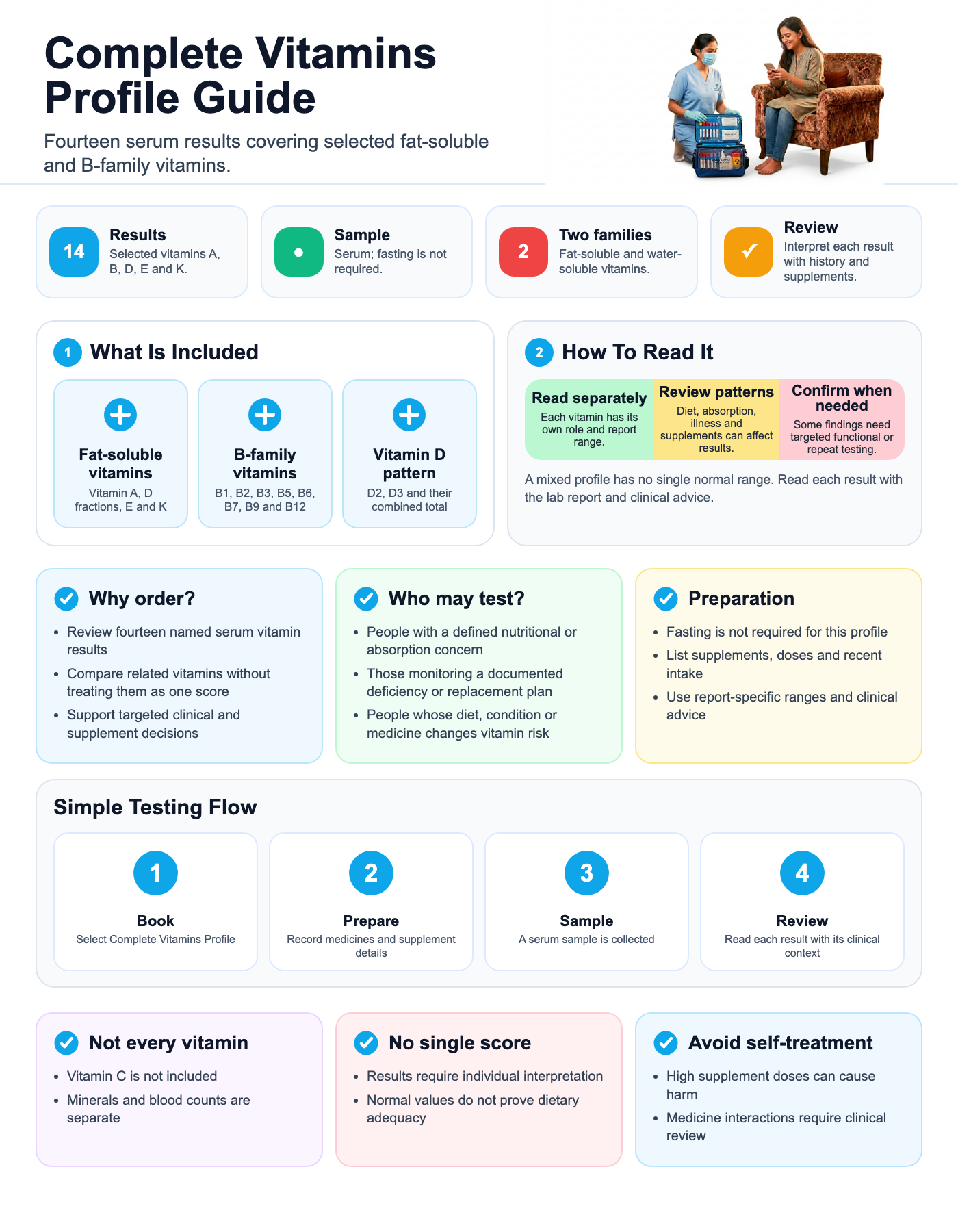
Complete Vitamins Profile Reference Guide
- Complete Vitamins Profile contains fourteen serum results for selected fat-soluble and B-family vitamins.
- The panel includes vitamins A, E, K, eight named B vitamins, Vitamin D2, Vitamin D3 and Vitamin D Total.
- Each result answers a different question; the profile does not produce one overall nutrition score.
- Vitamin C, minerals, blood counts, iron studies and functional deficiency markers are not included.
- Interpret results with symptoms, diet, absorption, medicines, supplements and the laboratory report.
Why This Test Is Ordered
| Reason | Description |
|---|---|
| Understand the fourteen-result composition |
|
| Review fat-soluble vitamins carefully |
|
| Understand the included B-family markers |
|
| Read Vitamin D2, D3 and total together |
|
| Know what serum results cannot prove |
|
Symptoms And Who Should Test
| Situation | Description |
|---|---|
| People with a defined deficiency concern |
|
| People following restrictive eating patterns |
|
| People with possible malabsorption |
|
| People using medicines or supplements |
|
| People monitoring treatment or earlier results |
|
Preparation And Interpretation Notes
| Topic | Guidance |
|---|---|
| Follow the verified collection instruction |
|
| Document every supplement and medicine |
|
| Share diet, health and symptom context |
|
| Interpret each result with its limits |
|
| Act safely on abnormal findings |
|
Frequently Asked Questions
How many results are included?
The profile contains fourteen named serum vitamin results.
Is fasting required for this profile?
No; fasting is not required for this profile.
Does this profile include Vitamin C?
No; Vitamin C is not included in the verified composition.
Which B vitamins are included?
It includes B1, B2, B3, B5, B6, B7, B9 and B12.
Why are three Vitamin D results reported?
D2 and D3 are reported separately and combined as Vitamin D Total.
Does one result show overall nutrition?
No; every vitamin result requires separate clinical interpretation.
Can supplements affect these results?
Yes; product, dose, schedule and recent intake can affect interpretation.
Can a normal panel exclude deficiency?
No; some concerns require targeted functional or repeat testing.
Can I book home collection?
Home collection is available where the entered address is serviceable.
Who should review my report?
A clinician should review results with symptoms, diet and supplements.
Should I start supplements immediately?
No; confirm the finding and appropriate dose with a clinician.