Choose your City

Loading cities…

HbA1c Test

HbA1c Test tells the average level of blood sugar over the past 2 to 3 Months. Diagnose & monitors diabetes and assess long-term blood sugar control.

Hba1c Test Info & Procedure

Group NameDIABETES
FastingFasting not required
Sample TypeEDTA
Sample CollectionHome sample collection
ReportsMost reports: 24–48 hours after the sample reaches the lab; timing varies by test.
Report typeDigital report

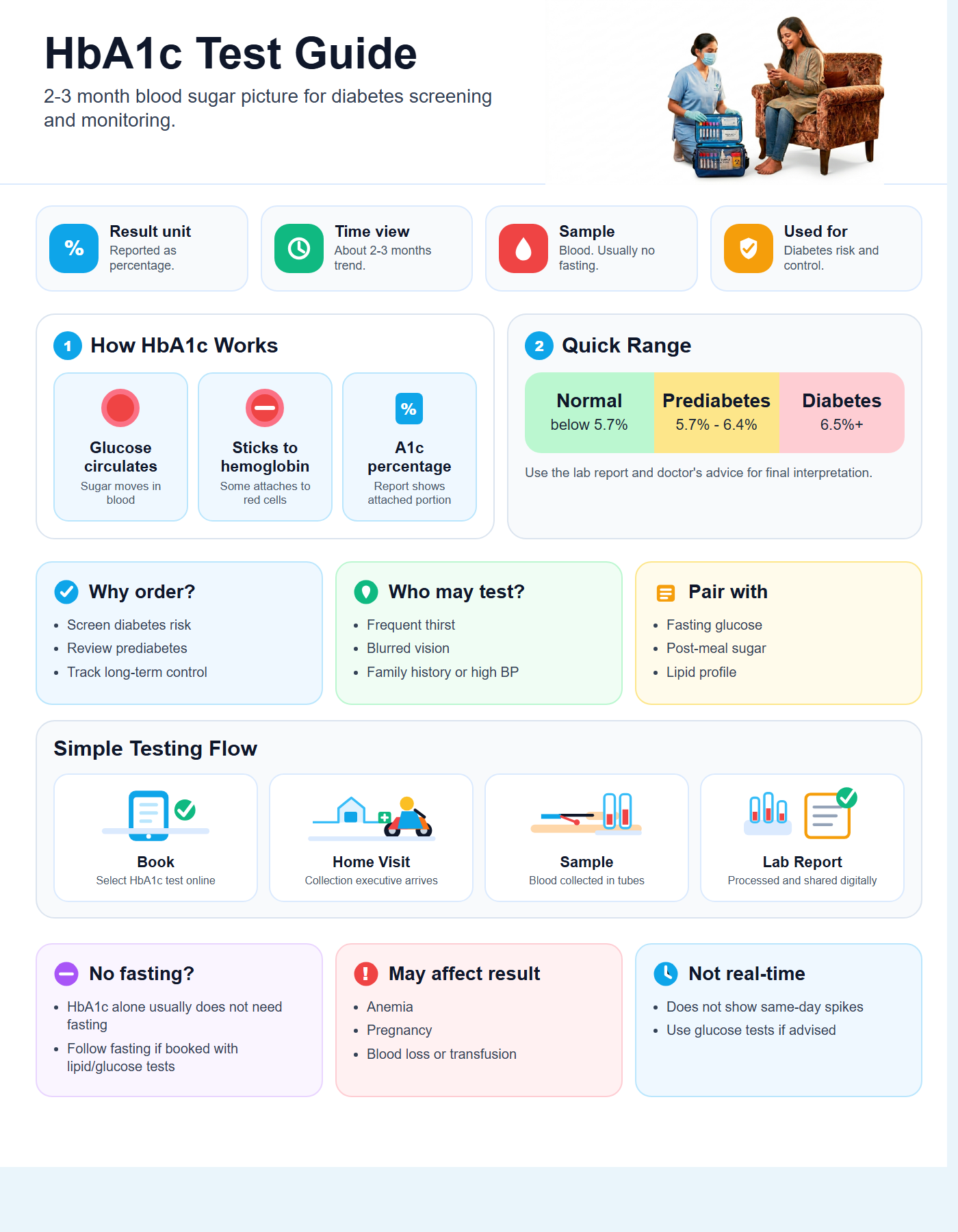
Hba1c Test Visual Guide

2-3 month blood sugar picture for diabetes screening and monitoring.

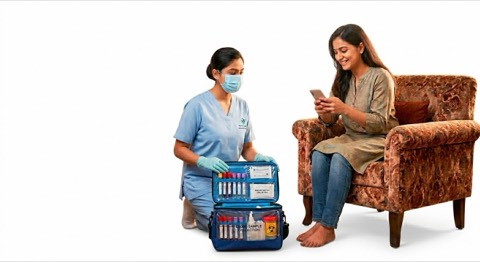
Technician collecting a blood sample from a woman at home

Download Hba1c Test Visual Guide infographic (PNG)

ResultReported as percentage.
What it showsAbout 2-3 months trend.
SampleBlood. Usually no fasting.
Common useDiabetes risk and control.

How HbA1c Works

  1. Glucose circulatesSugar moves in blood
  2. Sticks to hemoglobinSome attaches to red cells
  3. A1c percentageReport shows attached portion

Typical result context

Result contextGuide
Normalbelow 5.7%
Prediabetes5.7% - 6.4%
Diabetes6.5%+

Use the lab report and doctor's advice for final interpretation.

Why it may be advised

  • Screen diabetes risk
  • Review prediabetes
  • Track long-term control

When to discuss it

  • Frequent thirst
  • Blurred vision
  • Family history or high BP

Often reviewed with

  • Fasting glucose
  • Post-meal sugar
  • Lipid profile

Simple Testing Flow

  1. BookSelect HbA1c test online
  2. Home VisitCollection executive arrives
  3. SampleSample collected as instructed
  4. Lab ReportProcessed and shared digitally

No fasting?

  • HbA1c alone usually does not need fasting
  • Follow fasting if booked with lipid/glucose tests

May affect result

  • Anemia
  • Pregnancy
  • Blood loss or transfusion

Not real-time

  • Does not show same-day spikes
  • Use glucose tests if advised

About the Test

Hba1c is a laboratory test that measures a result in a Blood (EDTA) sample. It may be ordered to investigate symptoms, support a diagnosis or monitor a condition, depending on your clinician's advice.

The current booking price is shown at Rs. 376 against an MRP of Rs. 420, inclusive of taxes where applicable.

No fasting is required for this test alone. If another test in the same order requires fasting, follow its preparation instructions. Home sample collection is available in serviceable cities. A trained phlebotomist collects the sample using sterile equipment, and the report is shared online after processing.

HbA1c Test Sample Report

Hba1c Sample Report Format & Ranges

Relevant details from a Thyrocare sample report are shown below. A standalone PDF preview for Hba1c is not available here. Reference intervals may vary by method and patient factors. Use the interval printed on your own final report.

Conducted at Thyrocare Labs
Lab Accreditation CAP, NABL, UKAS, ANAB

Hba1c Thyrocare Sample-Report Range Table

Parameter Unit Reference Range
HbA1c % < 5.7

What is the Purpose of taking an HbA1c Blood Test?

This blood test is known for screening or diagnosing these two particular conditions:

1.) Type 2 Diabetes - An individual who has contracted Type 2 Diabetes, which happens when the glucose present in the blood becomes very high due to the body not creating as much insulin for the blood to keep on moving the blood sugar into their cells. It can also occur whenever the cells stop responding to the insulin being pumped through your body.

2.) Prediabetes - This condition happens when the blood glucose in your body is considered to be high by medical standards, but not yet reaching the borderline definition of Diabetes just yet.  The best course of action to prevent further spread of pediabetes in the body is through a shift in lifestyle changes, such as eating much healthier foods regularly and maintaining a proper schedule of exercise for the body to grow at a nominal rate. This has a chance of improving the quality of life of anyone who might be suffering from prediabetes turning into type-2 diabetes.

When should I take this test?

According to the Centers for Disease Control (CDC), taking the HbA1c blood test is always recommended to test for any diabetic or prediabetic conditions if they are under any of these categories:

If you are above the age of 45 -

  • In the case of any normal results, taking an HbA1c blood test should be around every 3 years or so.
  • In case your blood samples show some signs of prediabetes, the tests should be taken almost every year or every 2 years at max.
  • If the results for the blood test outright show signs of diabetes, a test needs to be taken twice a year to keep a close look at the body's reaction to said tests.

If you are below the age of 45 -

  • Already have prediabetes present in the body.
  • Having obesity or an overweight body.
  • Suffering from heart disease or a type of stroke.
  • A lot less active in a week, only working out 3 times.
  • Having very high levels of cholesterol present in the body.

What usually happens during an HbA1c blood test?

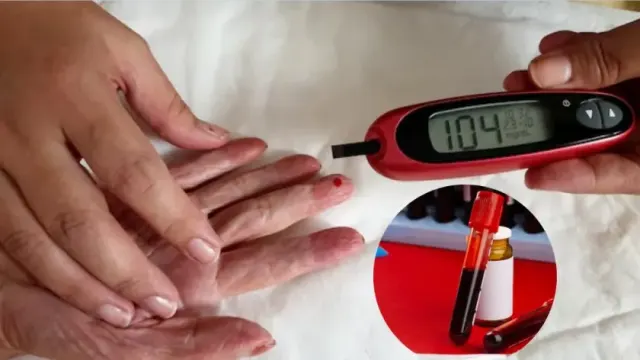
The test starts when a medical practitioner takes a small blood sample from one of your arm's veins and puts put into a very small and sterile test tube for further testing.

The entire process is expected to take less than 5 minutes in total and the patient will only feel a slight prick in the arm when the blood is being taken.

What is required of you to prepare for this test, and what are the risks that come with this test?

  • There is nothing notable that is needed for the preparation of this test and there are almost no risks that you may receive when taking this blood test.
  • The only sensation you may feel is a slight prick on the arm and a sumbling sensation that goes away after a minute or so.

What do the results of the test mean?

The test results are meant to show how much glucose percentage is present in the hemoglobin. The percentages are used to showcase what is defined as the norm for taking the test in the first place, and this is all dependent on the health, age, and several other factors. in order to properly diagnose diabetes, This is the percentage chart that should be used.

  • Normal Range - The A1c levels should be lower than 5.7%.
  • Prediabetes - percentages that are at least 5.7% to 6.4% fall under this category.
  • Diabetes - A1c levels that exceed 6.5% should fall under the diabetic category.

There are some medical providers who are able to provide more tests that can help diagnose diabetes. In case the test results come back higher than anticipated, going for another A1c test can help clarify the percentage of blood sugar present in the blood. Be sure to talk to your medical provider about the results of the blood test and whether another test is necessary for further elaboration.

Is there anything else that needs to be known regarding the HbA1c test?

It is important to note that the A1c test only focuses on Prediabetes and type 2 diabetes, and that having certain conditions, such as anemia and other specific types of blood disorders, an A1c blood test may not always be accurate in the diagnosis of diabetes. individuals who have kidney and liver failure can also affect the process of the A1c test. In such cases, a medical professional may ask the individual to take different tests for both prediabetes and diabetes.

Conclusion

Taking the HbA1c blood test is recommended by every major healthcare provider, as it is a vital test that can measure the amount of glucose present in the hemoglobin of the blood. This is a test that is meant for everyone, regardless of what conditions they might be having. This can also give doctors and medical professionals great knowledge of a patient's current status. With the correct lifestyle choices and medical practices taken daily, keeping a very healthy amount of A1c levels in the body is very easy to manage and maintain.
HbA1c Reference Guide

Educational guide only. The Thyrocare sample-report range is shown in the Reports & Ranges section. For your own result, use the range on your final report and discuss it with your clinician.

Why This Test Is Ordered

ReasonDescription
ScreeningChecks long-term blood sugar risk.
Diagnosis supportReflects average glucose over roughly 2 to 3 months.
MonitoringUseful for people already managing diabetes or prediabetes.

Symptoms And Who Should Test

SituationDescription
SymptomsFrequent urination, unusual thirst, fatigue, blurred vision, slow-healing sores.
Risk factorsAge over 45, overweight, family history, high BP, high cholesterol, PCOS, low activity.
Follow-up usersPeople with diabetes or prediabetes as advised by their doctor.

Preparation And Interpretation Notes

TopicGuidance
FastingNo fasting is required for this test alone. If another test in the same order requires fasting, follow its preparation instructions.
Combo bookingsFollow fasting instructions if the same order includes a fasting glucose test, lipid profile or another fasting test.
Interpretation cautionsAnaemia, recent blood loss or transfusion, pregnancy and conditions affecting red blood cells can affect interpretation.

Home sample collection for Hba1c is available in the cities below, subject to confirmation of your pincode at booking.

Check all cities where service is available →

Hba1c Test Price

Test conducted by Thyrocare partner laboratory Thyrocare Technologies Limited
Thyrocare partner laboratory
Rs. 420
Rs.376 10% Off
Free Home Sample Collection
Pay after sample collection
CAP Accredited NABL Accredited UKAS Management Systems ANAB Accredited

Why Choose Thyrocare for Hba1c

Review the preparation guidance, sample type, home collection availability and report information before booking Hba1c. The final collection and reporting details are confirmed during booking.
Home sample collection for diagnostic testing

Home Based & Quality Diagnostics
at an Unbeatable Price


Carefully designed Tests to provide you with the most vital information for your health.

Convenient Home Based

Affordable — Book Online

Certified Labs — NABL, CAP, ISO

Graphical Reports Online

Browse health articles →

Laboratory Processing

Your sample is collected by a trained phlebotomist and sent to the partner laboratory for analysis. The laboratory processes the sample using its validated procedures and quality controls. Your final report shows the result, unit and reference range used for that test. Discuss an unexpected or abnormal result with your clinician.