Download Creatinine - Serum Test Visual Guide infographic (PNG)
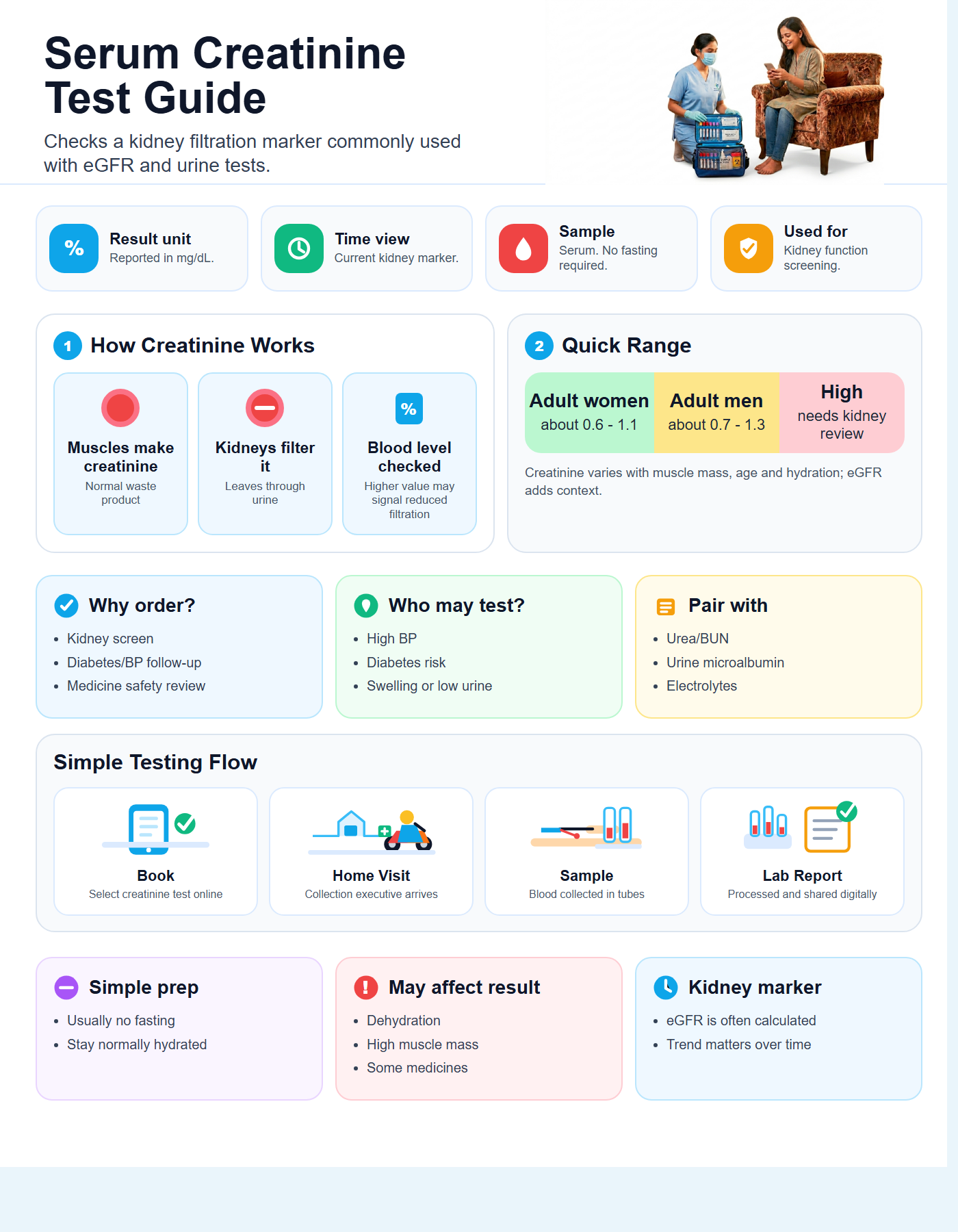
ResultReported in mg/dL.
What it showsCurrent kidney marker.
SampleSerum. No fasting required.
Common useKidney function screening.
How Creatinine Works
- Muscles make creatinineNormal waste product
- Kidneys filter itLeaves through urine
- Blood level checkedHigher value may signal reduced filtration
Typical result context
| Result context | Guide |
|---|
| Adult women | about 0.6 - 1.1 |
|---|
| Adult men | about 0.7 - 1.3 |
|---|
| High | needs kidney review |
|---|
Creatinine varies with muscle mass, age and hydration; eGFR adds context.
Why it may be advised
- Kidney screen
- Diabetes/BP follow-up
- Medicine safety review
When to discuss it
- High BP
- Diabetes risk
- Swelling or low urine
Often reviewed with
- Urea/BUN
- Urine microalbumin
- Electrolytes
Simple Testing Flow
- BookSelect creatinine test online
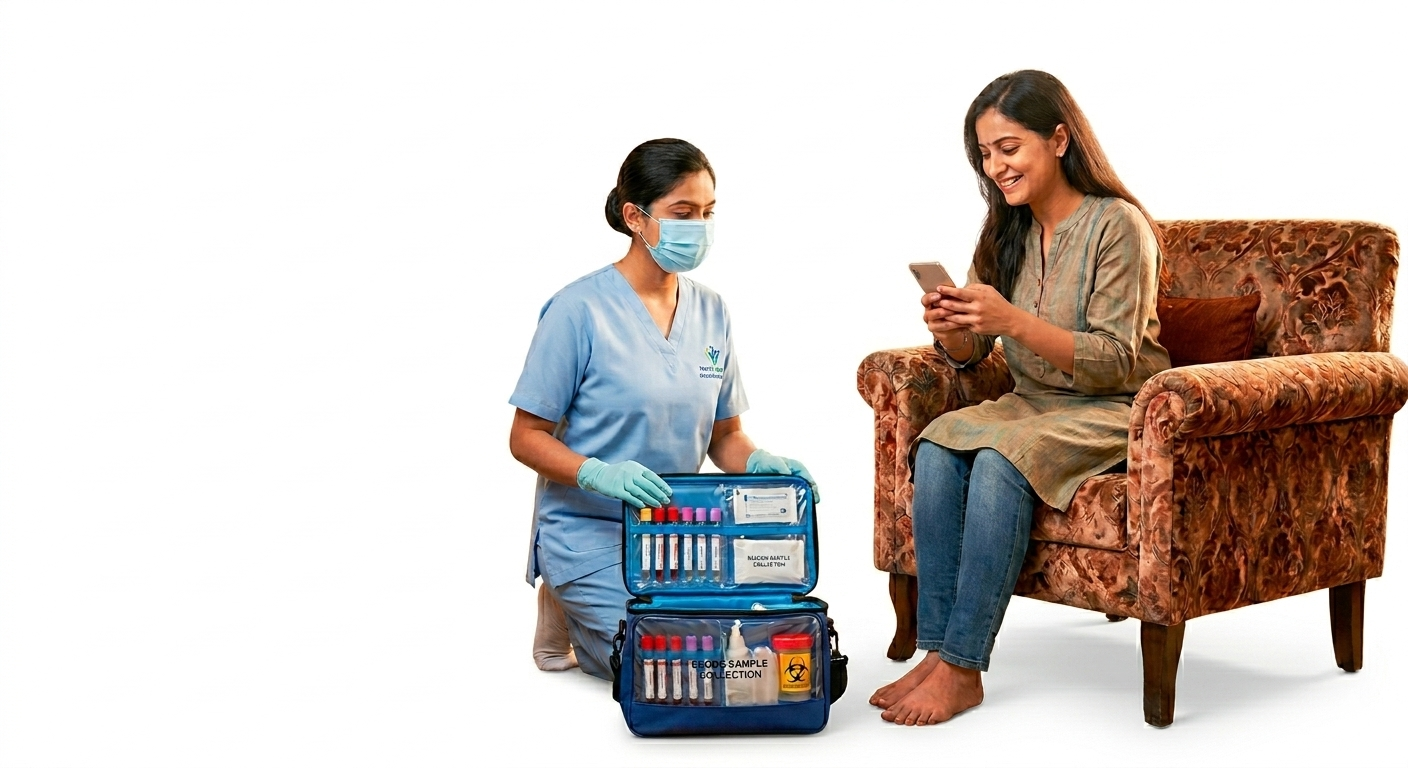
- Home VisitCollection executive arrives
- SampleBlood collected in tubes
- Lab ReportProcessed and shared digitally
Simple prep
- Usually no fasting
- Stay normally hydrated
May affect result
- Dehydration
- High muscle mass
- Some medicines
Kidney marker
- eGFR is often calculated
- Trend matters over time
About the test
Creatinine - Serum by Thyrocare is a group test is now available at a discounted price of Rs. 193 which is inclusive of taxes. Fasting is not required Creatinine - Serum and sample can be collected at your home.
Creatinine - Serum Sample Report Format & Ranges
View the Creatinine - Serum sample report in the original Thyrocare PDF format. The ranges below are from this Thyrocare sample report and may differ from general educational ranges because laboratory method and patient factors can vary. Customer name, contact details, address, barcode, order ID and lead ID are masked on the public sample copy.
The searchable values below support visitors looking for Creatinine - Serum report format, sample report values, normal range and reference range information.
| Conducted at |
Thyrocare Labs |
| Lab Accreditation |
CAP, NABL, UKAS, ANAB |
| Thyrocare Sample-Report Range |
0.72-1.18 |
Creatinine - Serum Thyrocare Sample-Report Range Table
| Parameter |
Unit |
Reference Range |
Method |
Report Section |
| CREATININE - SERUM |
mg/dL |
0.72-1.18 |
|
|
What is a Creatinine Serum Blood Test?
This test is widely used to assess the kidney function by checking the Creatinine level in the blood. Creatinine is described as a waste product that is continuously produced in the body from breakdown of muscle tissue. Later the Kidneys filter the Creatinine from the blood and flush it from the body through urine.
What is the Purpose of the Creatinine Serum Blood Test?
This blood test is used for 3 major purposes -
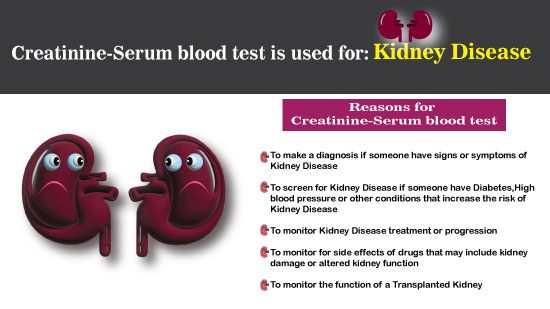
- To assess the general functioning of the Kidneys
- To monitor a prolonged kidney disease and assess its progression
- To evaluate the potential damage to Kidneys due to certain conditions such as hypertension, medications, and diabetes.
What are precautions that need to be taken before the Creatinine Serum Blood Test?
Unlike many other blood tests that require strict fasting or certain other stringent conditions for a perfect evaluation, this test is a bit different.
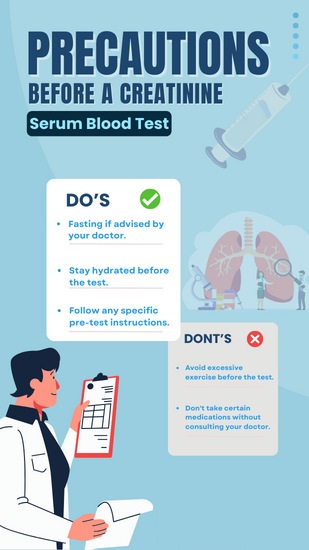
It does not involve any fasting restrictions however it requires certain dietary restrictions such as avoiding certain foods that can become a reason for increased Creatinine in the blood, foods such as cooked meat and high-protein diets must be avoided.
Apart from this, there are certain other basic precautions, mentioned below -
- Inform the doctor/physician about any medications that you have been taking recently.
- Dehydration as well as overhydration can become a concern to the accuracy of the test, hence drinking a nominal amount of water or as asked by your doctor must be followed.
- Any sort of exercise that can cause strain to the body as it can result in temporary fluctuation in the Creatinine level, affecting the accuracy of the test.
- If you have had any other test done recently ie., within 24 to 48 hours then do inform your doctor/physician about the same.
- In case the test is a part of routine monitoring then diligently follow the timing of the test as told by your doctor.
- In short, Creatinine levels can regularly fluctuate in the blood due to certain foods, medications, or activities. To receive an accurate result of your Creatinine Serum Blood Test all you need to do is to follow these basic precautions and listen to your doctor.
Creatinine Serum Reference Guide
Educational guide only. The Thyrocare sample-report range in the table below is the lab-specific source when available. General ranges can vary by laboratory, method, age, pregnancy status and medical history.
Why two ranges may appear: the Thyrocare sample-report range is the lab-specific range used on that sample report. The general range is an educational adult guide only. For an individual result, use the reference range printed on that person’s final lab report, as ranges can differ by laboratory method and patient factors.
Thyrocare Sample-Report Range (Lab-Specific)
| Measure | Report value | Note |
|---|
| CREATININE - SERUM | 0.72-1.18 mg/dL | From available Thyrocare sample report |
|---|
General Educational Range (Not a Report Range)
| Measure | Typical guide | Note |
|---|
| Women guide | 0.5 to 1.1 mg/dL | General MedlinePlus encyclopedia range; lab limits vary. |
|---|
| Men guide | 0.6 to 1.3 mg/dL | General MedlinePlus encyclopedia range; muscle mass matters. |
|---|
| Kidney signal | High creatinine | May suggest reduced kidney filtration or dehydration context. |
|---|
Why This Test Is Ordered
| Reason | Description |
|---|
| Kidney function | Checks how well kidneys are filtering creatinine from blood. |
|---|
| Routine panel | Often part of BMP, CMP or kidney function profiles. |
|---|
| Monitoring | Used in kidney disease, diabetes, high BP or medicine monitoring. |
|---|
Symptoms And Who Should Test
| Situation | Description |
|---|
| Kidney symptoms | Swelling, fatigue, appetite loss, urination changes, sleep trouble. |
|---|
| Risk factors | Diabetes, high blood pressure, family kidney disease, older age. |
|---|
| Follow-up users | People being monitored with eGFR, BUN or urine albumin. |
|---|
Preparation And Interpretation Notes
| Topic | Guidance |
|---|
| Fasting | Usually not needed unless ordered with other tests. |
|---|
| Muscle and diet | Muscle mass, meat intake and supplements can influence values. |
|---|
| Interpretation | Read with eGFR and clinical context. |
|---|

.png)