 General testing guide
Blood test
Toxo Gondii - Igg
1 parameter
₹300
View details Download Toxo Gondii - Igm Test Visual Guide infographic (PNG)
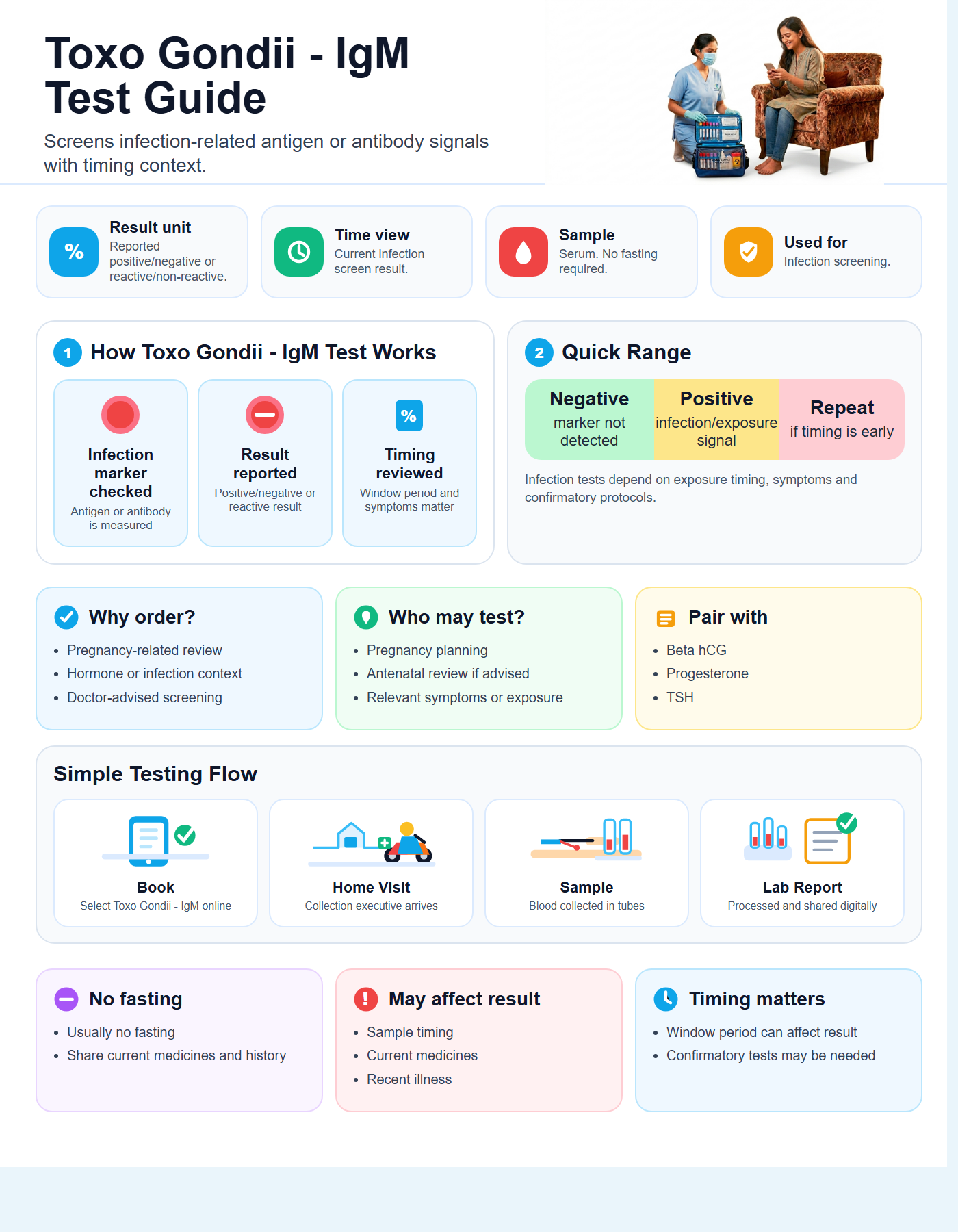
Toxo Gondii - Igm is a laboratory test that measures a result in a Blood (Serum) sample. It may be ordered to investigate symptoms, support a diagnosis or monitor a condition, depending on your clinician's advice.
The current booking price is shown at Rs. 53 against an MRP of Rs. 60, inclusive of taxes where applicable.
No fasting is required for this test alone. If another test in the same order requires fasting, follow its preparation instructions. Home sample collection is available in serviceable cities. A trained phlebotomist collects the sample using sterile equipment, and the report is shared online after processing.

Reference ranges vary by laboratory and method. Use the range printed on your final report. The information below is educational only.
| Measure | Typical guide |
|---|---|
| Interpretation | IgM may persist long after infection and can be falsely positive. Confirmatory testing is important, particularly during pregnancy. |
| Reason | Description |
|---|---|
| Purpose | Detects IgM antibodies to Toxoplasma gondii. |
| Situation | Description |
|---|---|
| Clinical context | Discuss this test with your clinician in the context of your symptoms, history and other results. |
| Topic | Guidance |
|---|---|
| Fasting | No fasting is required for this test alone. If another test in the same order requires fasting, follow its preparation instructions. |
| Before collection | Follow the preparation shown for this booking. Tell the laboratory about medicines, supplements and recent treatment; do not stop prescribed medicines yourself. |
Home sample collection for Toxo Gondii - Igm is available in the cities below, subject to confirmation of your pincode at booking.
 Thyrocare Technologies Limited





Carefully designed Tests to provide you with the most vital information for your health.
Convenient Home Based
Affordable — Book Online
Certified Labs — NABL, CAP, ISO
Graphical Reports Online
General testing guide  General testing guide
 General testing guide
 General testing guide
Your sample is collected by a trained phlebotomist and sent to the partner laboratory for analysis. The laboratory processes the sample using its validated procedures and quality controls. Your final report shows the result, unit and reference range used for that test. Discuss an unexpected or abnormal result with your clinician.