Choose your City

H3t - Profile New

H3t - Profile New is available for online booking with home sample collection.

H3t - Profile New

H3t - Profile New : Info - Procedure

Test Price
Rs. 1012 (Tax included)

List of test included in H3t - Profile New


  • Anti hepatitis c virus (anti hcv) - total

  • Hepatitis b surface antigen (hbsag)
  • Hiv i and ii

  • Tsh - ultrasensitive
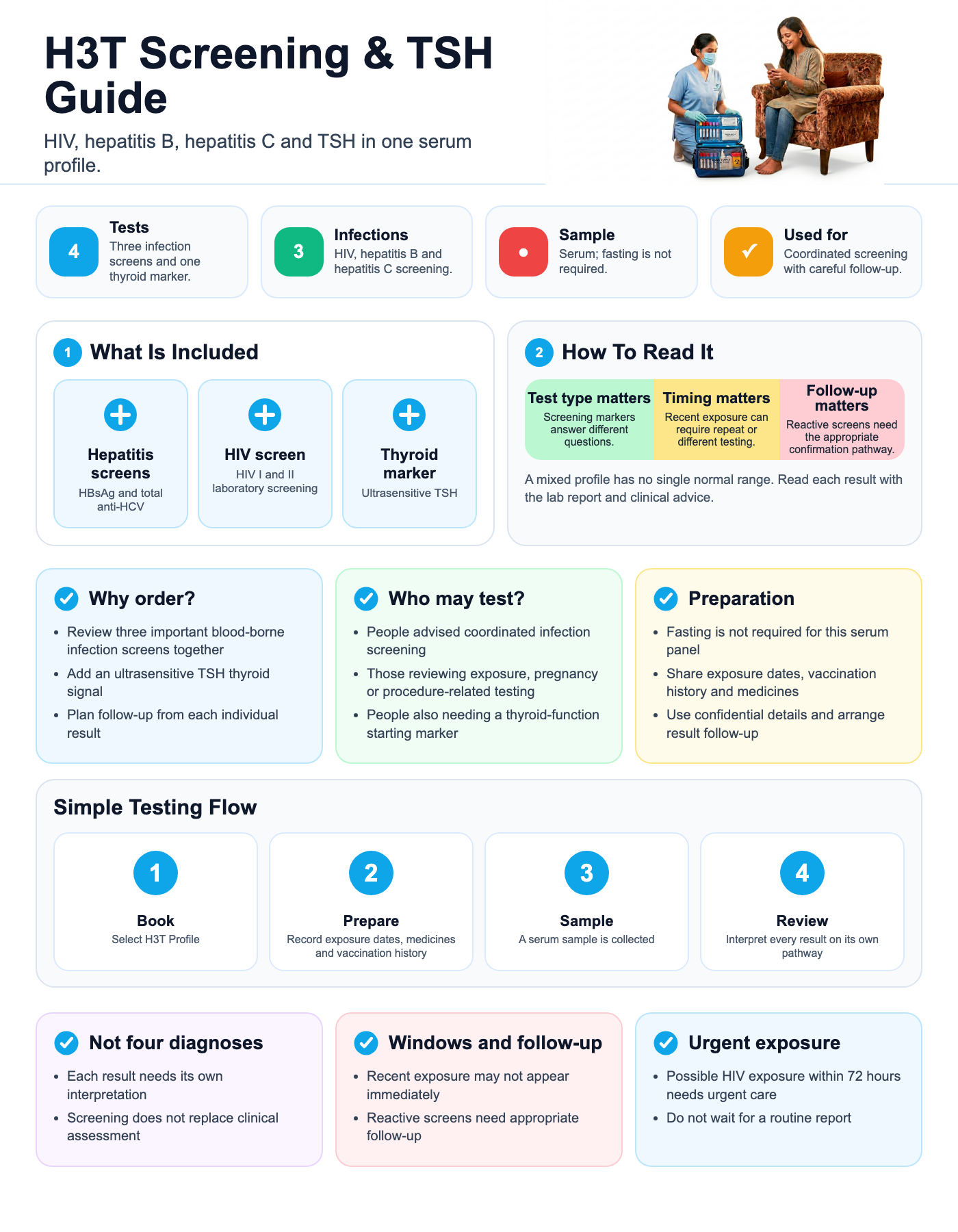
H3t Profile New visual guide

H3T Profile Infection Screening and TSH Reference Guide

  • H3T combines three infection screens with one thyroid-signalling test in a serum sample.
  • The infection section contains HIV I and II, HBsAg and total anti-HCV screening.
  • Ultrasensitive TSH is separate and does not diagnose or monitor these infections.
  • Screen timing, exact laboratory method and follow-up testing determine what infection results mean.
  • A clinician should review reactive, unexpected or exposure-related results without delay.

Why This Test Is Ordered

Understand the mixed purpose of H3T
  • H3T combines three infection screens with one thyroid-related hormone measurement.
  • The infection tests cover HIV, hepatitis B and hepatitis C markers.
  • Ultrasensitive TSH reflects pituitary signalling to the thyroid gland.
  • TSH does not indicate whether HIV or viral hepatitis is present.
  • The three infection results also cannot explain an abnormal TSH value.
  • Each result therefore needs its own question, timing and follow-up pathway.
  • One normal marker cannot compensate for another reactive or unexpected result.
  • Read the four results separately before considering the overall screening visit.
Read the HIV screen with timing
  • The panel lists HIV I and II; your report method determines how soon an infection may be detected.
  • HIV tests may detect antibodies, antigen with antibodies, or viral nucleic acid.
  • Each testing method has a different window after possible exposure.
  • No HIV test can detect infection immediately after it is acquired.
  • A negative result obtained too early may need planned repeat testing.
  • A reactive screening result requires the recognised follow-up testing sequence.
  • The report method should guide timing advice, careful repeat planning and result interpretation.
  • Recent antiretroviral prevention can also affect the appropriate follow-up plan.
Interpret total anti-HCV correctly
  • Total anti-HCV checks whether hepatitis C antibodies are detected in serum.
  • A reactive antibody result can reflect current or previous hepatitis C exposure.
  • Antibodies can remain after the body clears infection or treatment succeeds.
  • HCV RNA testing is needed to identify whether current infection is present.
  • Antibodies can take weeks to become detectable after a recent exposure.
  • Recent exposure may require HCV RNA testing despite a non-reactive antibody.
  • This package does not list an HCV RNA or viral-load result.
  • Do not label a reactive antibody result as active hepatitis C alone.
Know what HBsAg can show
  • HBsAg is a surface antigen marker associated with hepatitis B infection.
  • It may be detectable during either acute or chronic hepatitis B infection.
  • One HBsAg result cannot distinguish acute infection from chronic infection.
  • A complete first-time hepatitis B screen usually uses three serological markers.
  • This package does not list anti-HBs or total anti-HBc results.
  • HBsAg alone therefore cannot establish vaccine immunity or past resolved infection.
  • A recent hepatitis B vaccination can occasionally affect short-term interpretation.
  • A reactive result needs clinical review and an appropriate hepatitis B panel.
Use TSH as a thyroid starting marker
  • TSH is released by the pituitary gland to regulate thyroid hormone production.
  • A raised TSH often accompanies an underactive primary-thyroid pattern.
  • A low TSH often accompanies an overactive primary-thyroid pattern.
  • Pituitary conditions can produce patterns that do not follow these common relationships.
  • This package does not include free T4, total T4 or total T3.
  • An abnormal TSH may therefore require thyroid hormones and clinical context.
  • Illness, pregnancy, medicines and laboratory interference can influence interpretation.
  • TSH should not be used to explain infection-screening results in this package.

Symptoms And Who Should Test

People requesting coordinated infection screening
  • Some people prefer one visit for several recommended blood-borne infection screens.
  • Testing can be requested even when a person has no symptoms.
  • Many HIV and viral hepatitis infections can remain unnoticed for long periods.
  • The profile provides screening markers rather than complete diagnostic pathways.
  • Consent and confidential handling are especially important for HIV testing.
  • Pre-test information should explain possible results and necessary follow-up.
  • A clinician can decide whether additional STI or liver testing is appropriate.
  • Testing should connect people to prevention, vaccination, treatment or reassurance.
People after possible blood or sexual exposure
  • Shared needles, needlestick injuries and blood contact can warrant urgent assessment.
  • Sexual exposure may prompt HIV and hepatitis testing based on individual risk.
  • The exposure date is essential because screening windows differ between infections.
  • Possible HIV exposure within 72 hours needs urgent assessment for preventive treatment.
  • Do not wait for a routine home-collection result before seeking that assessment.
  • Recent HCV exposure may require RNA testing rather than antibody testing alone.
  • Hepatitis B vaccination status affects prevention and follow-up decisions after exposure.
  • A clinician should select baseline and repeat tests for the exact exposure.
People with liver-related concerns
  • Hepatitis B and hepatitis C may cause no early symptoms.
  • Jaundice, dark urine and persistent fatigue can prompt liver assessment.
  • Nausea, appetite loss and upper abdominal discomfort have many possible causes.
  • HBsAg and anti-HCV answer different screening questions about different viruses.
  • Neither test measures liver injury or liver function directly.
  • This package does not list ALT, AST, bilirubin or liver imaging.
  • Abnormal liver tests may justify broader viral and non-viral investigation.
  • Severe jaundice, confusion or repeated vomiting requires prompt medical care.
People planning pregnancy or clinical care
  • Pregnancy care commonly includes infection testing according to local clinical guidance.
  • HBsAg screening during pregnancy supports timely newborn prevention when reactive.
  • HIV testing can support early treatment and prevention of perinatal transmission.
  • Hepatitis C testing may be advised according to pregnancy and risk guidance.
  • TSH interpretation changes during pregnancy and requires pregnancy-aware reference guidance.
  • This package does not provide the complete hepatitis B triple-panel assessment.
  • Procedure or admission policies may request specific tests or laboratory methods.
  • Confirm the exact required markers before using H3T for formal documentation.
People with thyroid symptoms or history
  • Persistent tiredness, cold sensitivity or constipation may prompt thyroid assessment.
  • Palpitations, tremor, heat intolerance or unexplained weight loss may also prompt testing.
  • These symptoms are non-specific and do not confirm thyroid disease.
  • Ultrasensitive TSH provides a starting signal rather than a complete thyroid panel.
  • Known thyroid disease may require free T4 or other selected markers.
  • Treatment monitoring depends on diagnosis, medicine and time since dose changes.
  • A thyroid result should not distract from follow-up of reactive infection screens.
  • Bring previous thyroid reports and a current medicine list for review.

Preparation And Interpretation Notes

Follow the verified collection instructions
  • Fasting is not required for the current H3T Profile.
  • Follow stricter instructions when another booked test requires fasting.
  • A trained professional collects venous blood and prepares serum.
  • Maintain ordinary hydration unless a clinician gives different advice.
  • Do not delay urgent exposure care while arranging routine collection.
  • Tell the collector about fainting, difficult draws or blood-thinning medicines.
  • Minor discomfort or bruising can follow routine venous blood collection.
  • Confirm preparation again if the package composition changes before booking.
Record exposure dates and test methods
  • Write down the date and type of every recent possible exposure.
  • Tell the reviewer whether preventive HIV medicines were started or recently completed.
  • Ask which HIV method and generation appear on the laboratory report.
  • A method-specific window determines whether repeat HIV testing is appropriate.
  • Recent HCV exposure may need RNA testing before antibodies become detectable.
  • HBsAg timing should be reviewed with vaccination and exposure history.
  • Do not assume one repeat schedule suits all three infections.
  • Keep baseline and follow-up reports together for accurate comparison.
Share vaccines, medicines and supplements
  • Bring hepatitis B vaccination dates and any previous immunity results.
  • Mention recent hepatitis B vaccination before HBsAg interpretation.
  • List prescribed, over-the-counter and herbal products before thyroid review.
  • Report thyroid hormone, antithyroid medicine, amiodarone and lithium use.
  • Biotin supplements can interfere with some thyroid laboratory methods.
  • Tell the clinician or laboratory the biotin product and daily dose.
  • Do not stop prescribed medicines without instructions from the treating clinician.
  • Record dose timing so repeated TSH results have useful context.
Plan the right follow-up tests
  • A reactive HIV screen needs the recognised supplemental testing sequence.
  • A reactive anti-HCV result should be followed by HCV RNA testing.
  • A reactive HBsAg result needs hepatitis B evaluation and additional markers.
  • A non-reactive HBsAg result does not prove hepatitis B immunity.
  • An abnormal TSH may require free T4 and other thyroid investigations.
  • The package does not include viral loads or complete hepatitis panels.
  • Do not start treatment from a screening marker without clinical confirmation.
  • Arrange follow-up promptly instead of repeatedly ordering the same mixed profile.
Protect privacy and recognise urgent situations
  • Use a private phone number and email address for sensitive reports.
  • HIV testing should be voluntary, confidential and linked to appropriate counselling.
  • Decide how reactive results will be communicated before collection.
  • Possible HIV exposure within 72 hours requires urgent preventive-care assessment.
  • Severe jaundice, confusion or uncontrolled vomiting needs prompt medical attention.
  • Chest pain, fainting or severe breathing difficulty should not await TSH results.
  • A routine screening package is not an emergency diagnostic service.
  • Qualified clinical support can explain results without blame or stigma.

Frequently Asked Questions

What tests are included in H3T?

It includes HIV I/II, HBsAg, total anti-HCV and ultrasensitive TSH.

Is fasting required for H3T?

No; fasting is unnecessary unless another booked test requires it.

Does a reactive anti-HCV result prove current infection?

No; HCV RNA testing is needed to identify current infection.

Does HBsAg show hepatitis B immunity?

No; anti-HBs and total anti-HBc are not included.

Can an early negative HIV screen need repeating?

Yes; repeat timing depends on exposure date and test method.

Does H3T include HIV viral-load testing?

No; the listed panel contains an HIV screen, not viral load.

Does TSH diagnose a thyroid condition alone?

No; thyroid hormones and clinical context may also be needed.

Can biotin affect the TSH result?

Yes; report biotin products because some thyroid assays are affected.

Can I book H3T home collection?

Home collection is available where the entered address is serviceable.

Who should review a reactive result?

A qualified clinician should arrange the test-specific confirmation pathway.

Is H3T suitable immediately after HIV exposure?

Urgent assessment is needed within 72 hours; do not await routine screening.

Test Conducted By

Rs. 1080
Rs. 1012 6% Off
Home Sample Collection Available No Extra Charges
You will Save Rs. 68 on this Test
CAP Accredited NABL Accredited UKAS Management Systems ANAB Accredited

Why Choose Thyrocare for H3t - Profile New

Get tested for H3t - Profile New at fully automated diagnostic laboratory Thyrocare which has Centralized Processing Lab (CPL)
for esoteric tests and Regional Processing Labs in major cities of India.

Home Based Diagnostics

Home Based & Quality Diagnostics
at an Unbeatable Price


Carefully designed Panels to provide you with the most vital information for your health.

Convenient Home Based

Affordable — Book Online

Certified Labs — NABL, CAP, ISO

Graphical Reports Online

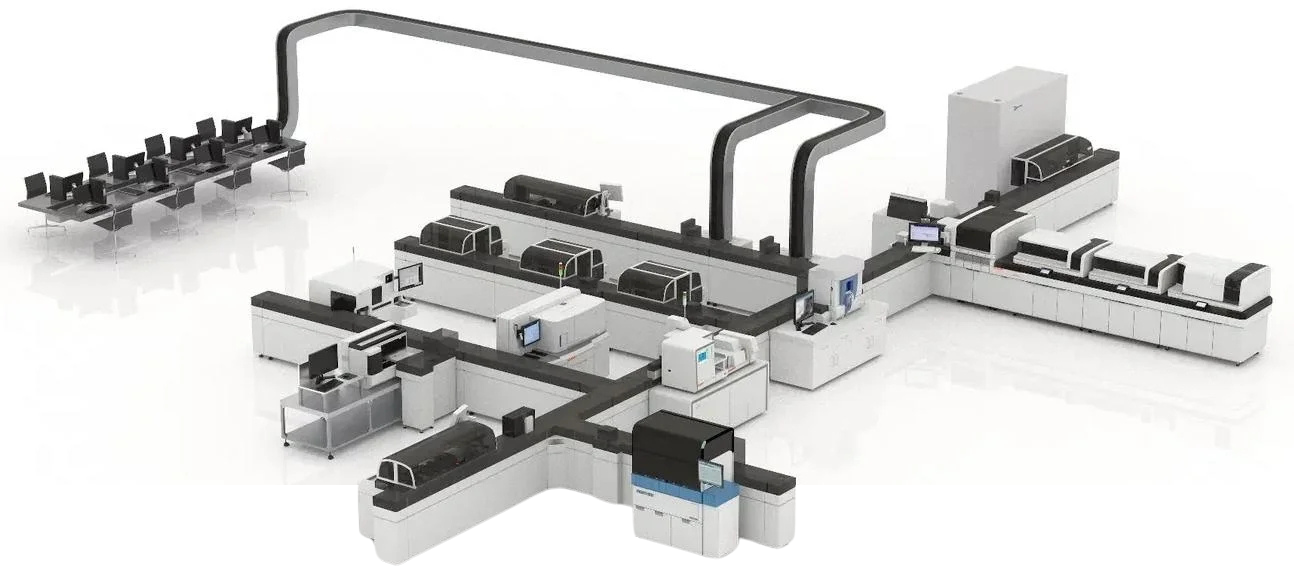
World's largest laboratory track automation

Thyrocare Technologies Limited has huge set up covering over 2 Lakh sq. ft. floor area ensures zero error processing if approx 50 thousand
specimens and over 3 lakh Clinical investigations per day is the right choice for your H3t - Profile New testing.

Aptio Automation

Aptio Automation

Similar Test & Packages INFECTION
Chikungunya Rapid Test (igg/igm) Dengue Rapid Test (igg/igm) Infection Checkup Profile Leptospira Rapid Test (igg/igm) Scrub Typhus Rapid Test (igg/igm)

Ratings & Reviews

4.8 ★★★★★

Based on verified bookings

Good service

Sample collection was smooth and reports were delivered on time.