Hemogram - 6 Part (DIFF) CBC Test Price, Details & Procedure
Hemogram - 6 Part (diff) by Thyrocare includes test on 30 parameters. It comprises of essential tests on Complete hemogram for an early detection of any potential illness in your body. This package which comes under WELLNESS category , now available at a discounted price of Rs. 330
Hemogram - 6 Part (diff) Info & Procedure
Group NameWELLNESS
FastingFasting not required
Sample TypeEDTA
Sample CollectionExpert collect samples at Home
ReportsDelivered Online within 24-48 Hrs*
Report typeEmail & Hardcopy ( On request )
Tests included
30 parameters listed
Explore the tests in Hemogram - 6 Part (diff) by category.
Complete Hemogram30
BASOPHILS
BASOPHILS - ABSOLUTE COUNT
EOSINOPHILS
EOSINOPHILS - ABSOLUTE COUNT
HEMATOCRIT(PCV)
HEMOGLOBIN
IMMATURE GRANULOCYTE PERCENTAGE(IG%)
IMMATURE GRANULOCYTES(IG)
LYMPHOCYTE
LYMPHOCYTES - ABSOLUTE COUNT
MEAN CORP.HEMO.CONC(MCHC)
MEAN CORPUSCULAR HEMOGLOBIN(MCH)
MEAN CORPUSCULAR VOLUME(MCV)
MEAN PLATELET VOLUME(MPV)
MENTZER INDEX
MONOCYTES
MONOCYTES - ABSOLUTE COUNT
NEUTROPHILS
NEUTROPHILS - ABSOLUTE COUNT
NUCLEATED RED BLOOD CELLS
NUCLEATED RED BLOOD CELLS %
PLATELET COUNT
PLATELET DISTRIBUTION WIDTH(PDW)
PLATELET TO LARGE CELL RATIO(PLCR)
PLATELETCRIT(PCT)
RED CELL DISTRIBUTION WIDTH (RDW-CV)
RED CELL DISTRIBUTION WIDTH - SD(RDW-SD)
RED CELL DISTRIBUTION WIDTH INDEX (RDWI)
TOTAL LEUCOCYTES COUNT (WBC)
TOTAL RBC
Hemogram - 6 Part (diff) Sample Report Format & Ranges
View the Hemogram - 6 Part (diff) sample report in the original Thyrocare PDF format. Customer name, contact details, address, barcode, order ID and lead ID are masked on the public sample copy.
Exact Thyrocare PDF preview will show here after a masked sample PDF is attached to this report.
The searchable values below support visitors looking for Hemogram - 6 Part (diff) report format, sample report values, normal range and reference range information.
Conducted at
Thyrocare Labs
Lab Accreditation
CAP, NABL, ICMR, NGSP, ISO
Reference Range
0.02 - 0.1
Results
Highly specific
Hemogram - 6 Part (diff) Reference Range Table
Parameter
Unit
Reference Range
Method
Report Section
BASOPHILS - ABSOLUTE COUNT
X 10³ / µL
0.02 - 0.1
EOSINOPHILS - ABSOLUTE COUNT
X 10³ / µL
0.02 - 0.5
LYMPHOCYTES - ABSOLUTE COUNT
X 10³ / µL
1.0-3.0
MONOCYTES - ABSOLUTE COUNT
X 10³ / µL
0.2 - 1.0
NEUTROPHILS - ABSOLUTE COUNT
X 10³ / µL
2.0-7.0
BASOPHILS
%
0-2
EOSINOPHILS
%
1-6
HEMOGLOBIN
g/dL
13.0-17.0
IMMATURE GRANULOCYTES(IG)
X 10³ / µL
0-0.3
IMMATURE GRANULOCYTE PERCENTAGE(IG%)
%
0-0.5
Hemogram - 6 Part (diff) Report Sections Covered
Report Section
Parameters in Sample Report
Complete Hemogram
28
Hormone
1
What to expect during a #testname# Blood Test?
During a #testname# blood test, a healthcare professional takes a blood sample from your arm, which is also known as venipuncture. A lab expert known as a phlebotomist conducts this process using a needle. He locates a vein on your arm and inserts the needle to draw blood. The blood sample will be transferred into a test tube and will be taken safely to the labs for the test.
The lab technicians will test the sample by following established standards, to ensure correct reports. Thyrocare Labs has a team of professionals who are skilled and experienced. After the testing is done, your reports are sent to your email within 1-2 days. On the other hand, if you need a hard copy of the report, expect the delivery of the same within 3-5 business days.
Preparations before a #testname# Blood Test?
For #testname# blood tests, special preparations are not needed. However, some important steps must be taken to ensure accuracy in the test reports.
#testname# test requires {[fasting]}, the same must be done for at least 8-10 hours. Only water can be consumed during this time. Being hydrated helps the blood draw easier and also ensures accurate results.
Eating junk food and consuming sweetened beverages or alcohol can alter your test results. So, it is advisable to be careful about what to consume or take the advice of a professional.
Consumption of certain medications is also prohibited before blood tests. You can discuss the details about the same with your doctor to be sure.
Avoid strenuous exercise as it can alter the readings of a blood test.
Are there any side effects of the test?
There are no side effects or risks attached to #testname# blood tests. The test involves the collection of a blood sample from your home. A phlebotomist draws blood from your arm using a needle, which only takes a few minutes. During this process, you might feel a sting on your arm, which is not painful. The blood sample will then be sent to the labs. Our medical experts take all precautions and safety measures during sample collection and testing.
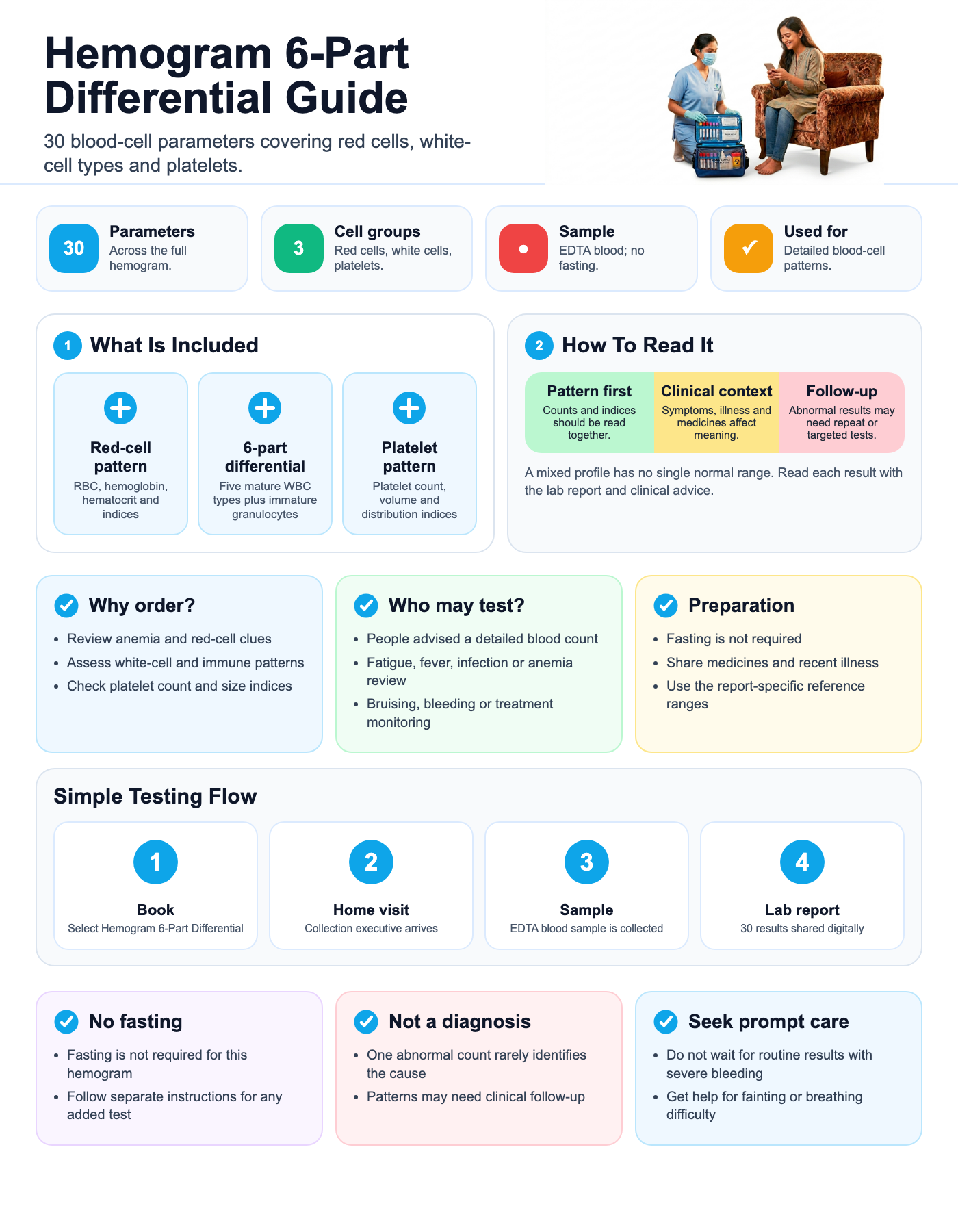
Profile visual guide
Tap the guide to enlarge it and read every detail.
Hemogram 6-Part Differential Reference Guide
This hemogram reports 30 measurements from red cells, white cells and platelets.
The six-part differential adds immature granulocytes to the five mature white-cell types.
Counts, percentages and calculated indices describe patterns rather than naming one disease.
Age, pregnancy, altitude, medicines, recent illness and laboratory methods can affect interpretation.
A clinician should compare the complete pattern with symptoms, history and earlier reports.
Why This Test Is Ordered
See three blood-cell systems together
Red cells carry oxygen, white cells support immune defence and platelets assist clot formation.
The report places measurements from all three cell systems in one connected view.
A change in one cell line may be isolated or accompany changes elsewhere.
Reviewing all cell lines helps a clinician decide which finding deserves priority.
The package contains counts, percentages, cell-size measures and calculated screening indices.
Several values describe the same cell population from different analytical angles.
Thirty reported values therefore do not represent thirty separate diseases or diagnoses.
The overall pattern matters more than interpreting each flagged number in isolation.
Describe the red-cell oxygen pattern
Hemoglobin is the oxygen-carrying protein contained inside circulating red blood cells.
Hematocrit estimates the proportion of whole blood occupied by red blood cells.
The red-cell count records how many red cells are present in the measured volume.
Low hemoglobin can support an anemia assessment but cannot reveal its cause alone.
Blood loss, nutritional deficiency, inflammation and inherited disorders can produce different patterns.
High red-cell measures may accompany dehydration, altitude exposure or increased cell production.
Symptoms can be mild despite an abnormal value, especially when change develops gradually.
Breathlessness, dizziness or chest discomfort requires clinical assessment beyond the report.
Classify red-cell size and variation
MCV describes the average size of the red blood cells in the sample.
MCH estimates the average hemoglobin amount contained within each red blood cell.
MCHC describes the average hemoglobin concentration within the packed red-cell volume.
RDW-CV and RDW-SD describe variation in red-cell size using different calculations.
Small, average or large cell patterns can guide the next anemia investigations.
Iron, vitamin B12, folate and inflammatory causes require targeted confirmation when suspected.
The Mentzer index is a screening calculation, not proof of iron deficiency or thalassemia.
The RDW index also needs confirmation because calculated discrimination indices can overlap.
Read the six-part white-cell differential
The total leukocyte count records all measured white blood cells together.
Neutrophils commonly respond during bacterial infection, inflammation, physical stress or medicine exposure.
Lymphocytes include immune cells involved in antibody responses and targeted cellular defence.
Monocytes help remove germs and damaged material while supporting wider immune responses.
Eosinophils may change with allergy, inflammation, parasites and selected medicines.
Basophils participate in allergic and inflammatory responses but normally form a small fraction.
Immature granulocytes reflect earlier granulocyte stages released into circulating blood.
No differential result can identify a specific infection or immune disorder by itself.
Add platelet count and size context
The platelet count records cell fragments that help form an initial clot after injury.
Mean platelet volume describes the average measured size of circulating platelets.
Platelet distribution width describes how much platelet size varies within the sample.
Platelet large-cell ratio estimates the proportion of comparatively larger platelets.
Plateletcrit estimates the blood-volume fraction occupied by platelets in the sample.
These automated indices provide context but do not directly test platelet function.
Clotting-factor tests and platelet-function studies answer different clinical questions.
Unexpected counts may require repeat analysis or smear review before treatment decisions.
Symptoms And Who Should Test
People having a general health review
A clinician may request a hemogram during a routine or pre-treatment health assessment.
The test can reveal blood-cell changes before a clear symptom pattern develops.
A normal report does not exclude every infection, nutritional problem or blood disorder.
Screening value depends on age, history, examination and the reason for testing.
Children, pregnant people and older adults require reference intervals appropriate to them.
Altitude and smoking can influence hemoglobin interpretation in some clinical settings.
Previous reports help distinguish a stable personal pattern from a recent change.
Further testing should answer the specific concern raised by history or results.
People with possible anemia symptoms
Persistent fatigue, weakness, pallor or reduced exercise tolerance may prompt blood-count testing.
Dizziness, headaches, palpitations and breathlessness can occur with anemia and other conditions.
Heavy menstrual bleeding or other ongoing blood loss should be discussed before interpretation.
Dietary history and digestive symptoms may help identify possible nutrient-related causes.
Hemoglobin identifies anemia severity only after the correct personal threshold is applied.
MCV and RDW can narrow possibilities without replacing ferritin or vitamin testing.
Inherited hemoglobin disorders may require hemoglobin analysis or genetic assessment.
Severe breathlessness, fainting or chest pain should not wait for routine results.
People with fever or infection concerns
Fever, repeated infections or unexplained inflammation may lead to a differential count.
White-cell changes can support assessment but cannot identify the responsible organism.
A normal white-cell count does not reliably exclude a serious infection.
Neutrophil and lymphocyte changes must be read with symptoms and illness timing.
Immature granulocytes may rise during marrow response but are not specific for sepsis.
Cultures, imaging or targeted infection tests may still be required.
Steroids and other medicines can alter white-cell patterns without causing infection.
High fever with confusion, breathing difficulty or severe weakness needs prompt care.
People with bruising or bleeding
Easy bruising, nosebleeds or prolonged bleeding may lead to platelet-count assessment.
A low platelet count can increase concern about bleeding depending on severity and context.
A normal platelet count does not exclude clotting-factor or platelet-function problems.
Medicines, infections, immune conditions and marrow disorders can alter platelet counts.
Unexpectedly low counts sometimes reflect platelet clumping within an EDTA sample.
The laboratory may request a repeat specimen or inspect a blood smear.
Bleeding assessment may also include PT, aPTT or specialised platelet tests.
Heavy uncontrolled bleeding, black stools or neurological symptoms need urgent assessment.
People monitoring illness or treatment
Clinicians may repeat hemograms during infection recovery or chronic disease follow-up.
Chemotherapy, radiation and selected medicines can affect one or several blood-cell lines.
Monitoring schedules should follow the treatment plan rather than an arbitrary calendar.
A trend can be informative even when individual results remain within range.
Small shifts may reflect hydration, biological variation or analytical variation.
Recent bleeding, transfusion or pregnancy can substantially change comparison with baseline.
Bring earlier reports and record treatment changes before the sample date.
Get tested for Hemogram - 6 Part (diff) at fully automated diagnostic laboratory Thyrocare which has Centralized Processing Lab (CPL) for esoteric tests and Regional Processing Labs in major cities of India.
Home Based & Quality Diagnostics
at an Unbeatable Price
Carefully designed Panels to provide you with
the most vital information for your health.
Convenient Home Based
Affordable — Book Online
Certified Labs — NABL, CAP, ISO
Graphical Reports Online
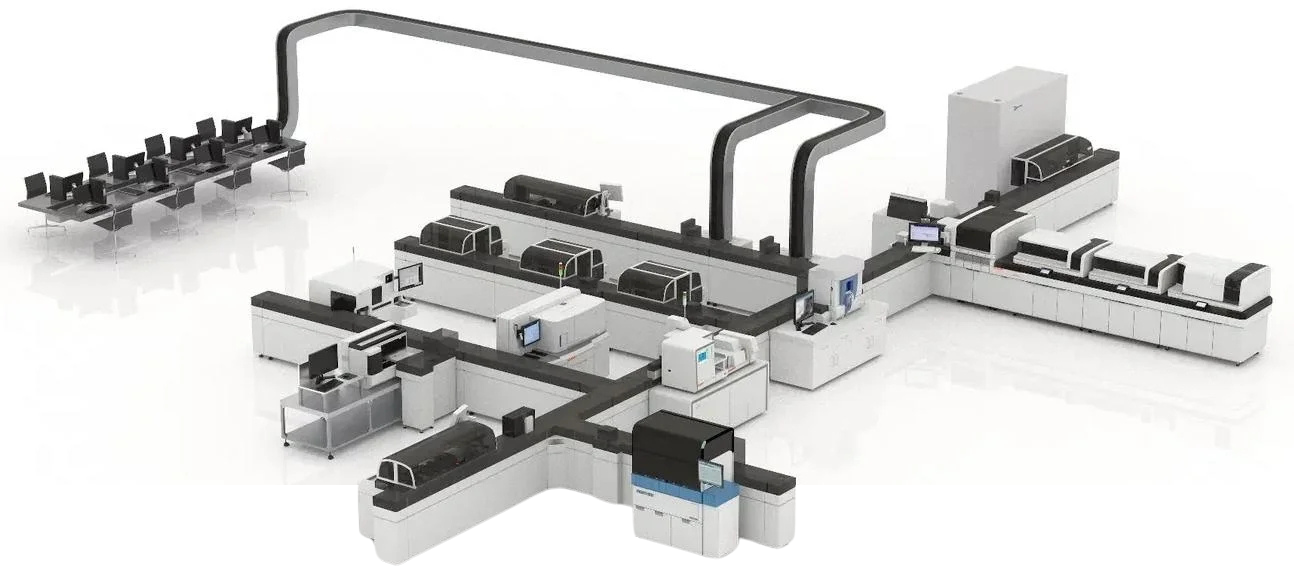
Laboratory technology
Thyrocare Technologies Limited has huge set up covering over 2 Lakh sq. ft. floor area ensures zero error processing if approx 50 thousand specimens and over 3 lakh Clinical investigations per day is the right choice for your Hemogram - 6 Part (diff) testing.