Iron Deficiency Profile by Thyrocare includes test on 4 parameters. It comprises of essential tests on Iron deficiency for an early detection of any potential illness in your body. This package which comes under ANAEMIA,PREGNANCY category , now available at a discounted price of Rs. 643
Iron Deficiency Profile Info & Procedure
Group NameANAEMIA,PREGNANCY
FastingOvernight Fasting required
Sample TypeSERUM
Sample CollectionExpert collect samples at Home
ReportsDelivered Online within 24-48 Hrs*
Report typeEmail & Hardcopy ( On request )
Tests included
4 parameters listed
Explore the tests in Iron Deficiency Profile by category.
Iron Deficiency4
% TRANSFERRIN SATURATION
IRON
TOTAL IRON BINDING CAPACITY (TIBC)
UNSAT.IRON-BINDING CAPACITY(UIBC)
What to expect during a #testname# Blood Test?
During a #testname# blood test, a healthcare professional takes a blood sample from your arm, which is also known as venipuncture. A lab expert known as a phlebotomist conducts this process using a needle. He locates a vein on your arm and inserts the needle to draw blood. The blood sample will be transferred into a test tube and will be taken safely to the labs for the test.
The lab technicians will test the sample by following established standards, to ensure correct reports. Thyrocare Labs has a team of professionals who are skilled and experienced. After the testing is done, your reports are sent to your email within 1-2 days. On the other hand, if you need a hard copy of the report, expect the delivery of the same within 3-5 business days.
Preparations before a #testname# Blood Test?
For #testname# blood tests, special preparations are not needed. However, some important steps must be taken to ensure accuracy in the test reports.
#testname# test requires {[fasting]}, the same must be done for at least 8-10 hours. Only water can be consumed during this time. Being hydrated helps the blood draw easier and also ensures accurate results.
Eating junk food and consuming sweetened beverages or alcohol can alter your test results. So, it is advisable to be careful about what to consume or take the advice of a professional.
Consumption of certain medications is also prohibited before blood tests. You can discuss the details about the same with your doctor to be sure.
Avoid strenuous exercise as it can alter the readings of a blood test.
Are there any side effects of the test?
There are no side effects or risks attached to #testname# blood tests. The test involves the collection of a blood sample from your home. A phlebotomist draws blood from your arm using a needle, which only takes a few minutes. During this process, you might feel a sting on your arm, which is not painful. The blood sample will then be sent to the labs. Our medical experts take all precautions and safety measures during sample collection and testing.
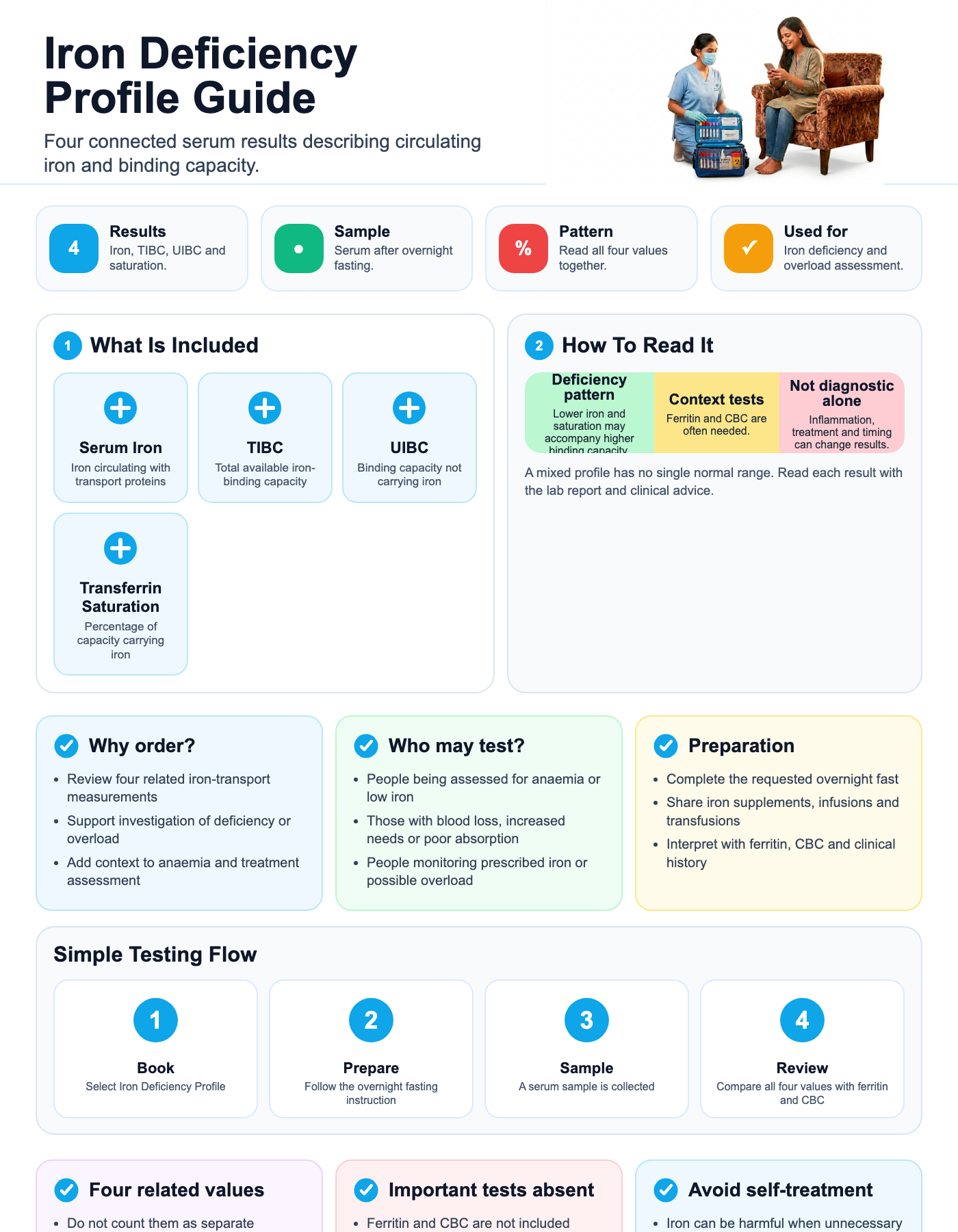
Profile visual guide
Tap the guide to enlarge it and read every detail.
Iron Deficiency Profile Reference Guide
Iron Deficiency Profile contains serum iron, TIBC, UIBC and transferrin saturation in one serum sample.
The four results describe circulating iron and the blood's available capacity to carry it.
TIBC, UIBC and saturation are connected to serum iron, so patterns matter more than isolated numbers.
Ferritin, CBC and inflammation markers are not included and may be required for a diagnosis.
Interpretation should consider fasting, collection time, supplements, treatment, bleeding, inflammation and the laboratory report.
Why This Test Is Ordered
Reason
Description
Understand the four-result profile
Serum iron estimates the iron circulating in the sampled blood at collection time.
TIBC describes the blood proteins’ total capacity to bind and transport iron.
UIBC describes the binding capacity that was not occupied by iron.
Transferrin saturation expresses how much binding capacity was carrying iron.
The four values describe one connected iron-transport pattern rather than four diseases.
TIBC commonly relates to serum iron and UIBC within the same report.
Saturation commonly relates serum iron to the reported total binding capacity.
Read the complete pattern before attaching meaning to any isolated result.
Read serum iron carefully
Serum iron reflects circulating iron bound mainly to the transport protein transferrin.
It does not directly measure the amount of iron stored throughout the body.
Food, supplements, collection time and recent treatment can change serum iron.
Iron concentrations can also vary during the day and between separate collections.
A low result can occur with deficiency, inflammation or other health conditions.
A high result can follow supplementation, transfusion, liver problems or iron overload.
One serum iron value cannot confirm the cause of an abnormal pattern.
Ferritin, CBC findings and medical history usually provide essential additional context.
Understand total binding capacity
TIBC estimates the total amount of iron that circulating proteins could bind.
Transferrin contributes most of the clinically measured iron-binding capacity in serum.
Binding capacity may rise when the body increases transferrin during iron depletion.
Higher TIBC can therefore accompany low iron and low saturation in deficiency.
TIBC may fall during inflammation, liver disease or reduced protein production.
Pregnancy and estrogen-containing medicines can also influence binding protein concentrations.
A normal TIBC does not exclude early deficiency or mixed medical conditions.
Interpret TIBC beside iron, saturation, ferritin and the laboratory’s own range.
Use UIBC as the unfilled portion
UIBC represents iron-binding sites that were available but not carrying measured iron.
It complements serum iron by describing the unoccupied portion of binding capacity.
Higher UIBC can accompany a pattern with less circulating iron available for binding.
Lower UIBC can occur when more binding sites are occupied by circulating iron.
UIBC and TIBC are closely related and should not be treated as independent evidence.
Laboratories may obtain or derive related binding measurements using different validated methods.
Method differences can affect report ranges and comparison with an older result.
Use UIBC to understand the pattern, not to name a diagnosis by itself.
Interpret transferrin saturation as a percentage
Transferrin saturation estimates the percentage of reported binding capacity occupied by iron.
Lower saturation can support reduced iron availability when other findings agree.
Higher saturation can prompt assessment for supplementation, transfusion or iron overload.
Saturation depends on related iron and binding-capacity measurements in the same sample.
An unusual component can therefore influence the calculated percentage substantially.
Inflammation can lower circulating iron and alter the surrounding laboratory pattern.
No single percentage should replace ferritin, CBC and clinical assessment.
Use the report range because methods, populations and clinical questions differ.
Symptoms And Who Should Test
Situation
Description
People being assessed for anaemia
Fatigue, weakness, dizziness, breathlessness or paleness can prompt an anaemia assessment.
These symptoms are common and do not identify iron deficiency on their own.
A CBC is usually needed to show whether anaemia is actually present.
Hemoglobin and red-cell indices help classify the observed anaemia pattern.
Ferritin helps assess iron stores and is not included in this profile.
Iron studies can add context when deficiency and inflammation may overlap.
Thalassaemia and other blood disorders can resemble an iron-related pattern.
The cause of anaemia should be investigated before assuming diet is responsible.
People with menstrual or pregnancy-related risk
Heavy or prolonged menstrual bleeding can gradually reduce iron stores and cause anaemia.
Bleeding lasting over seven days deserves discussion with a qualified clinician.
Frequent pad changes or large clots can also indicate unusually heavy bleeding.
Pregnancy increases iron requirements as maternal blood volume and fetal needs grow.
A pregnancy care plan commonly includes haemoglobin screening and targeted follow-up.
This profile does not replace pregnancy-specific screening or obstetric review.
Report current pregnancy, recent delivery and the timing of menstrual bleeding.
Seek prompt care for heavy bleeding, fainting, chest pain or severe breathlessness.
People with blood loss or donation history
Repeated blood donation removes iron and can lower stores before symptoms appear.
Visible gastrointestinal or urinary bleeding requires medical evaluation rather than supplements alone.
Slow digestive-tract blood loss may occur without obvious red blood in stools.
Adults with confirmed deficiency may need investigation for an underlying bleeding source.
Recent surgery, injury or childbirth can also alter iron and haemoglobin status.
Blood-thinning medicines can increase the significance of ongoing or unexplained bleeding.
Share donation dates, bleeding history and previous haemoglobin or ferritin results.
Finding and treating the cause is as important as replacing lost iron.
People with intake or absorption concerns
Low iron intake can contribute when dietary supply does not meet individual needs.
Plant-based iron is generally absorbed less efficiently than iron from animal sources.
Coeliac disease and inflammatory bowel disease can reduce absorption or cause blood loss.
Stomach or intestinal surgery can also change iron absorption and long-term requirements.
Rapid growth increases iron needs during infancy, childhood and adolescence.
Diet history supports assessment but cannot establish current iron stores alone.
Ferritin and CBC may be needed when malabsorption or nutritional deficiency is suspected.
A dietitian can help plan intake after the medical cause is understood.
People monitoring treatment or possible overload
Iron studies may help monitor response when treatment follows a confirmed clinical indication.
Oral tablets, intravenous iron and blood transfusions affect results differently over time.
Testing too soon after treatment can produce a pattern that is difficult to interpret.
Unexpectedly high saturation may require ferritin, liver tests and specialist assessment.
Hereditary haemochromatosis evaluation uses laboratory patterns plus clinical and family information.
Frequent transfusions can also increase the risk of accumulating excess iron.
Iron overload cannot be diagnosed from this four-result profile alone.
Follow the treating clinician’s timing rather than repeating tests without a defined question.
Preparation And Interpretation Notes
Topic
Guidance
Follow the overnight fasting instruction
This profile currently requires overnight fasting before the serum sample is collected.
Confirm the permitted fasting duration when booking or receiving collection instructions.
Plain water is generally allowed unless the laboratory provides different instructions.
Morning collection can reduce variation related to changing serum iron during the day.
Do not extend fasting beyond the instructed period to influence the result.
Follow stricter preparation when another booked test has additional requirements.
Tell the collector if fasting was incomplete or the collection time changed.
Rescheduling may be safer if fasting could worsen diabetes, pregnancy illness or frailty.
Document iron treatment and recent procedures
List oral iron, multivitamins and traditional products containing iron before collection.
Record the product strength, dose, schedule and time of the last dose.
Mention recent intravenous iron because it can temporarily change circulating measurements.
Report recent blood transfusions and provide their dates whenever possible.
Share recent blood donation, surgery or significant bleeding with the reviewing clinician.
Do not stop prescribed medicine unless the treating clinician gives that instruction.
Do not take an extra iron dose to improve the laboratory result.
Consistent preparation helps make a later trend easier to compare.
Share conditions that alter the pattern
Report fever, infection, inflammation or recent acute illness during interpretation.
Mention liver, kidney, digestive or chronic inflammatory conditions that affect iron handling.
Share pregnancy, menstrual history, recent delivery and any ongoing bleeding symptoms.
List estrogen therapy or oral contraceptives because binding proteins may change.
Provide family history of haemochromatosis, thalassaemia or other inherited blood disorders.
Recent diet changes may matter but rarely explain the complete pattern alone.
Bring previous iron studies, CBC and ferritin reports for trend comparison.
A stable clinical history makes an isolated change easier to investigate appropriately.
Combine the report with missing context tests
This profile does not include ferritin, haemoglobin or a complete blood count.
Ferritin is commonly used to assess stored iron and support deficiency diagnosis.
CBC findings show whether anaemia exists and describe red-cell size and variation.
Inflammation can change ferritin, serum iron, TIBC and transferrin saturation patterns.
C-reactive protein may help interpret ferritin when inflammation is clinically suspected.
Kidney, liver, bleeding or absorption investigations depend on the individual history.
One abnormal marker may need confirmation or targeted follow-up before treatment changes.
Use the clinician’s question to decide which additional tests are genuinely useful.
Know interpretation limits and next steps
Do not diagnose iron deficiency solely from a low serum iron result.
Do not diagnose overload solely from a high serum iron or saturation result.
Reference intervals can differ with method, units, age, sex and laboratory policy.
Compare repeat results cautiously when the laboratory or preparation has changed.
Iron supplements can cause harm when taken unnecessarily or stored around children.
Persistent deficiency requires investigation for bleeding, absorption problems or increased needs.
Chest pain, fainting, severe breathlessness or active heavy bleeding needs urgent assessment.
A qualified clinician should connect laboratory patterns with symptoms and examination findings.
Frequently Asked Questions
What does Iron Deficiency Profile include?
It includes serum iron, TIBC, UIBC and transferrin saturation.
Is fasting required for this profile?
Yes; follow the laboratory’s overnight fasting instruction.
Does this profile include ferritin?
No; ferritin is a separate test for stored iron.
Does this profile include a CBC?
No; haemoglobin and blood-cell indices require a CBC.
Can low serum iron confirm deficiency?
No; the full pattern, ferritin, CBC and history matter.
What does TIBC describe?
TIBC estimates the total capacity of blood proteins to bind iron.
What does UIBC describe?
UIBC estimates the binding capacity not occupied by measured iron.
What does transferrin saturation show?
It estimates the percentage of binding capacity carrying iron.
Can supplements affect these results?
Yes; report oral iron, infusions and recent transfusions.
Can I book home collection?
Home collection is available where the entered address is serviceable.
Who should review the report?
A clinician should interpret all four results with ferritin and CBC.
When should I repeat this profile?
Repeat timing depends on treatment, bleeding and the clinical question.
Get tested for Iron Deficiency Profile at fully automated diagnostic laboratory Thyrocare which has Centralized Processing Lab (CPL) for esoteric tests and Regional Processing Labs in major cities of India.
Home Based & Quality Diagnostics
at an Unbeatable Price
Carefully designed Panels to provide you with
the most vital information for your health.
Convenient Home Based
Affordable — Book Online
Certified Labs — NABL, CAP, ISO
Graphical Reports Online
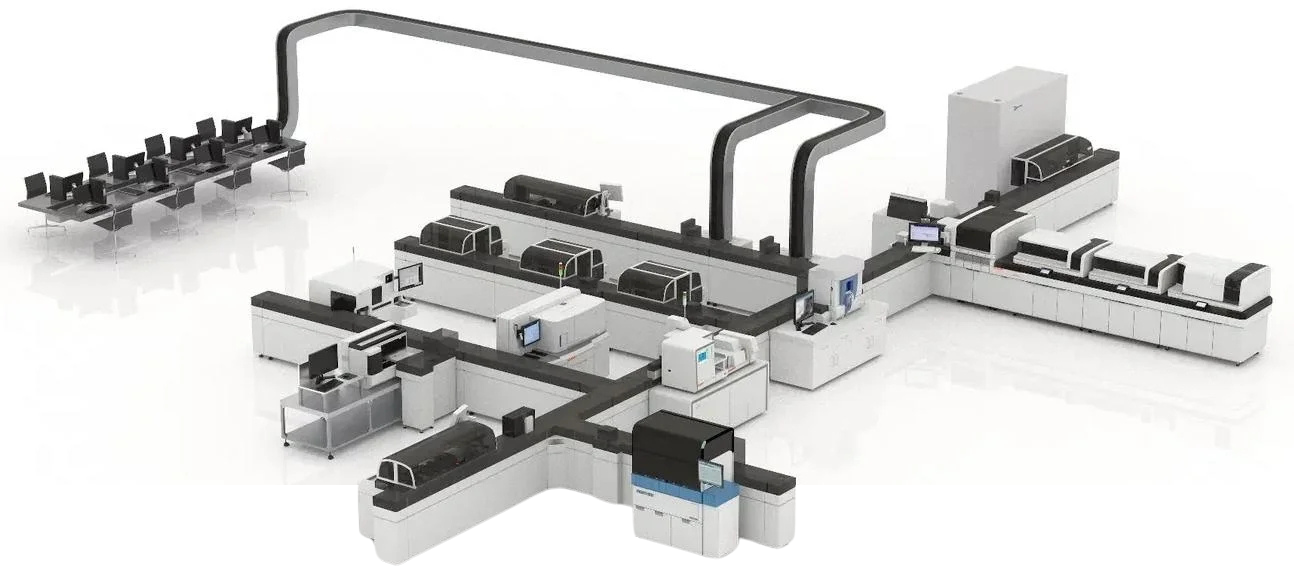
Laboratory technology
Thyrocare Technologies Limited has huge set up covering over 2 Lakh sq. ft. floor area ensures zero error processing if approx 50 thousand specimens and over 3 lakh Clinical investigations per day is the right choice for your Iron Deficiency Profile testing.