Choose your City

Typhoid Test

Typhoid Test is available for online booking with home sample collection.

Typhoid Test

Typhoid Test : Info - Procedure

Test Price
Rs. 1005 (Tax included)

List of test included in Typhoid Test


  • Typhoid-igg
  • Typhoid-igm
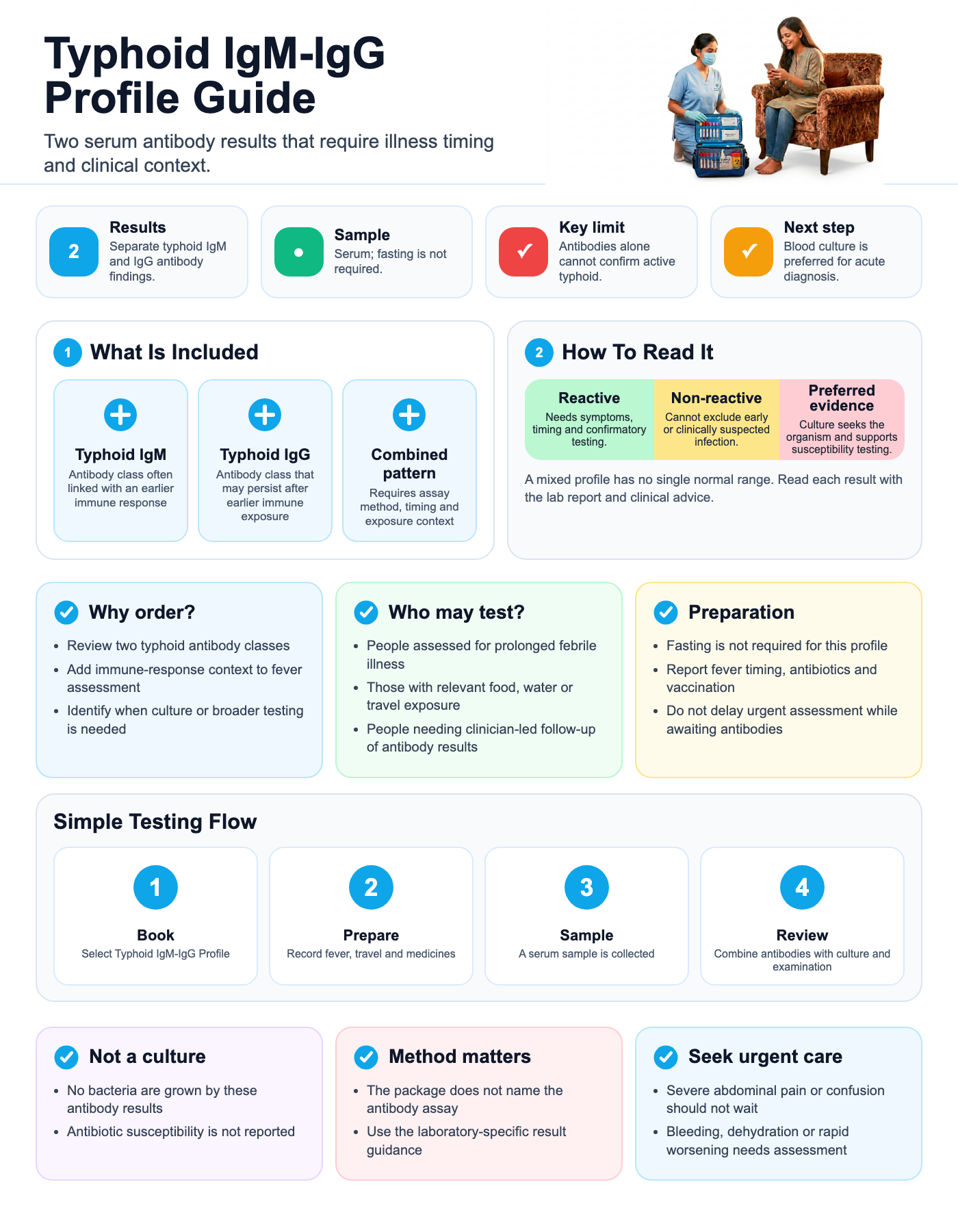
Typhoid visual guide

Typhoid IgM-IgG Profile Reference Guide

  • This profile reports two serum antibody classes labelled Typhoid IgM and Typhoid IgG.
  • Antibodies reflect an immune response rather than directly detecting living Salmonella Typhi bacteria.
  • A reactive or non-reactive pattern cannot independently confirm or exclude acute typhoid fever.
  • Illness timing, previous infection, vaccination, antibiotics and the laboratory method affect interpretation.
  • Blood culture remains the preferred acute diagnostic test and can guide antibiotic selection.

Why This Test Is Ordered

Understand the two antibody results
  • The package reports separate Typhoid IgM and Typhoid IgG antibody findings.
  • IgM is an antibody class commonly associated with an earlier immune response.
  • IgG is an antibody class that may remain measurable after earlier exposure.
  • The exact appearance and duration of each response varies between people.
  • The laboratory method and target antigen also influence how patterns behave.
  • The live package listing does not identify the specific antibody assay method.
  • Use the current report interpretation rather than assuming a universal cutoff.
  • Read IgM and IgG together instead of treating either as a diagnosis.
Separate antibodies from active infection
  • Antibody testing measures the body’s immune response to selected bacterial targets.
  • It does not directly show living Salmonella Typhi circulating in blood.
  • A reactive result can occur without proving current symptomatic infection.
  • Past infection or vaccination can contribute antibodies relevant to interpretation.
  • Cross-reacting immune responses can reduce the specificity of some serologic methods.
  • A non-reactive result may occur before a detectable antibody response develops.
  • CDC guidance warns that typhoid serology cannot distinguish acute from past exposure reliably.
  • Clinical decisions should not depend on one antibody result alone.
Recognise illness timing and uncertainty
  • Typhoid fever often begins gradually and can resemble many other febrile illnesses.
  • Antibody patterns can change as the immune response develops during illness.
  • Early collection may produce limited serologic evidence despite genuine infection.
  • Later collection may detect antibodies that do not prove ongoing bacterial disease.
  • Antibiotic treatment can change the overall diagnostic picture and culture yield.
  • The report should be matched with fever duration and the collection date.
  • A clinician may repeat or replace testing when suspicion remains high.
  • Negative screening language should never be used to dismiss worsening symptoms.
Understand why blood culture is preferred
  • Blood culture attempts to grow Salmonella Typhi from the patient’s blood.
  • CDC identifies blood culture as the mainstay of acute enteric-fever diagnosis.
  • Multiple cultures may be required because one sample can miss low-level bacteraemia.
  • Culture is most useful when collected before antibiotics whenever clinically safe.
  • Urgent treatment should not be delayed solely to obtain an ideal specimen.
  • A grown organism can undergo antimicrobial susceptibility testing.
  • Susceptibility information matters because antibiotic resistance is increasingly common.
  • These two antibody results provide no susceptibility or resistance information.
Know the profile’s diagnostic boundaries
  • The package lists Typhoid IgM and IgG without separate paratyphoid markers.
  • Typhoid and paratyphoid fever can produce very similar clinical illnesses.
  • The listed results should not be assumed to exclude paratyphoid fever.
  • The profile is not listed as a Widal O-and-H antibody panel.
  • It does not include blood culture, stool culture, PCR or a blood count.
  • Malaria, dengue and other infections can resemble enteric fever clinically.
  • Non-infectious inflammation can also present with prolonged fever and weakness.
  • Broader testing should follow the patient’s exposure history and examination.

Symptoms And Who Should Test

People with clinically suspected enteric fever
  • Prolonged fever, headache and marked fatigue may prompt enteric-fever assessment.
  • Abdominal pain, nausea, constipation or diarrhoea can occur during typhoid fever.
  • Some people develop chills, muscle aches, vomiting or a transient trunk rash.
  • No single symptom reliably separates typhoid from other infectious illnesses.
  • A clinician should assess vital signs, hydration and abdominal findings.
  • Antibody testing should support, not replace, the complete fever evaluation.
  • Blood culture may remain appropriate even when an antibody result is available.
  • Persistent fever requires medical review rather than repeated home testing alone.
People with food or water exposure
  • Salmonella Typhi spreads mainly through food or water contaminated with human waste.
  • Unsafe drinking water and inadequate sanitation increase exposure risk.
  • Food handled without proper handwashing can transmit the bacteria.
  • Travel to endemic areas adds important context to a prolonged fever.
  • South Asia carries substantial enteric-fever risk for residents and travellers.
  • Visiting friends or relatives can involve local food and water exposures.
  • Record destinations, dates, meals, water sources and sick contacts when possible.
  • Exposure history informs testing but cannot confirm infection by itself.
People tested early in their illness
  • An early immune response may not yet produce a reactive antibody result.
  • A non-reactive early sample cannot safely exclude clinically suspected typhoid.
  • Blood culture is especially important during acute bacteremic illness.
  • Previous antibiotics can reduce culture sensitivity and complicate interpretation.
  • Tell the clinician exactly when fever began and when medicines started.
  • Do not wait for antibody conversion when the person is becoming sicker.
  • The clinician may collect multiple cultures or choose additional fever tests.
  • Follow-up should reflect clinical progress rather than one laboratory label.
People with previous vaccination or infection
  • Typhoid vaccination lowers risk but does not provide complete protection.
  • Vaccination history can be relevant when an antibody test is interpreted.
  • Earlier typhoid infection may leave antibodies after symptoms have resolved.
  • Serology may not reliably separate vaccination, past infection and acute disease.
  • Record the latest vaccine date and vaccine type when known.
  • Share any previous confirmed typhoid episode and its approximate date.
  • Typhoid vaccination does not protect against every paratyphoid infection.
  • Current symptoms still need assessment despite vaccination or old antibody results.
People with severe or worsening symptoms
  • Severe enteric fever can cause intestinal bleeding, perforation or encephalopathy.
  • Increasing abdominal pain, rigidity or marked tenderness needs urgent assessment.
  • Confusion, unusual sleepiness or fainting can signal serious systemic illness.
  • Black or bloody stools may indicate gastrointestinal bleeding.
  • Persistent vomiting and reduced urination can accompany dangerous dehydration.
  • Breathing difficulty, shock signs or rapidly worsening weakness requires emergency care.
  • Do not delay urgent treatment while waiting for antibody or culture reports.
  • Home collection is inappropriate when immediate clinical assessment is needed.

Preparation And Interpretation Notes

Follow the verified serum instruction
  • Fasting is not required for the two results in this profile.
  • A trained professional collects blood and the laboratory prepares serum.
  • Normal food and fluid intake may continue unless another test requires fasting.
  • Follow the stricter instruction when several tests are booked together.
  • Tell the collector about fainting, difficult draws or blood-thinning medicines.
  • Minor discomfort or bruising can follow a routine venous blood draw.
  • No special diet can make an antibody pattern diagnostic.
  • Preparation instructions should never postpone urgent fever assessment.
Record illness timing and exposure
  • Write down the first fever date and the serum collection date.
  • Record the highest measured temperature and the pattern of fever.
  • List headache, abdominal symptoms, rash, bowel changes and vomiting.
  • Share recent travel, unsafe water, street food and household illness exposure.
  • Mention previous typhoid or paratyphoid diagnosis and vaccination history.
  • Tell the clinician whether symptoms are improving, stable or worsening.
  • Timing helps explain why IgM and IgG patterns may not match expectations.
  • Do not assign infection dates from antibodies without clinical evidence.
Report antibiotics before interpretation
  • List every antibiotic taken during the current illness, including incomplete courses.
  • Record the medicine name, dose, start date and last dose when possible.
  • Antibiotics may reduce the chance of recovering bacteria in culture.
  • Do not stop prescribed treatment merely to improve a future culture result.
  • Do not self-start leftover antibiotics after viewing an antibody result.
  • Resistance patterns make clinician-selected treatment and susceptibility testing important.
  • Finish prescribed treatment for confirmed typhoid exactly as directed.
  • Persistent fever during treatment needs reassessment rather than independent dose changes.
Interpret the antibody pattern safely
  • Use the exact labels and interpretation supplied by the performing laboratory.
  • Do not apply another brand’s cutoff or timing chart to this report.
  • The package listing does not specify ELISA, rapid-card or another assay format.
  • Reactive IgM may support recent immune activity without confirming acute typhoid.
  • Reactive IgG may reflect current, past or vaccine-related immune exposure.
  • Both non-reactive results cannot exclude early infection or another fever cause.
  • Culture, examination and epidemiological context should outweigh isolated antibody assumptions.
  • A clinician should explain discordant IgM and IgG findings.
Plan next steps and prevention
  • Ask whether blood cultures are needed before further antibiotics are given.
  • A complete blood count and other fever tests may provide additional context.
  • Confirmed infection may require public-health, food-handling or clearance advice.
  • Wash hands with soap after toilet use and before handling food.
  • Use safe drinking water and properly cooked food during exposure risk.
  • Avoid preparing food for others when typhoid is diagnosed or strongly suspected.
  • Vaccination reduces risk but does not replace food and water precautions.
  • Follow the clinician’s plan for treatment, relapse review and carrier testing.

Frequently Asked Questions

What does this Typhoid Profile include?

It includes separate serum Typhoid IgM and Typhoid IgG antibody results.

Is fasting required?

No; fasting is not required for this serum profile.

Can reactive IgM confirm acute typhoid?

No; reactive IgM needs symptoms, timing and preferably culture evidence.

Can reactive IgG prove current infection?

No; IgG may reflect current, past or vaccine-related immune exposure.

Can two non-reactive results exclude typhoid?

No; early infection and test limitations can produce non-reactive results.

Which test is preferred for acute diagnosis?

Blood culture is preferred and can support antibiotic susceptibility testing.

Does this package test for paratyphoid?

No separate paratyphoid markers are listed in this two-result profile.

Should I stop antibiotics before testing?

No; change prescribed antibiotics only on the treating clinician’s advice.

Can I book home collection?

Home collection is available where the address is serviceable and symptoms are stable.

When should I seek urgent care?

Severe pain, bleeding, confusion, dehydration or rapid worsening needs urgent assessment.

Who should interpret my antibody report?

A clinician should combine it with fever timing, exposure and culture findings.

Test Conducted By

Rs. 1608
Rs. 1005 38% Off
Home Sample Collection Available No Extra Charges
You will Save Rs. 603 on this Test
CAP Accredited NABL Accredited UKAS Management Systems ANAB Accredited

Why Choose Thyrocare for Typhoid Test

Get tested for Typhoid Test at fully automated diagnostic laboratory Thyrocare which has Centralized Processing Lab (CPL)
for esoteric tests and Regional Processing Labs in major cities of India.

Home Based Diagnostics

Home Based & Quality Diagnostics
at an Unbeatable Price


Carefully designed Panels to provide you with the most vital information for your health.

Convenient Home Based

Affordable — Book Online

Certified Labs — NABL, CAP, ISO

Graphical Reports Online

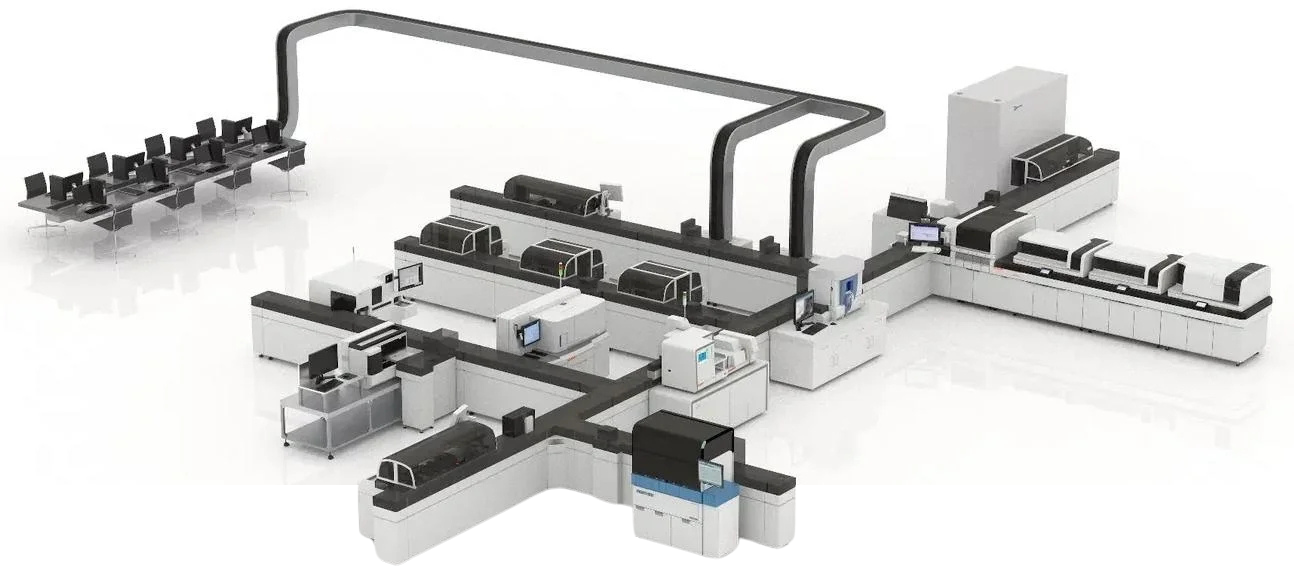
World's largest laboratory track automation

Thyrocare Technologies Limited has huge set up covering over 2 Lakh sq. ft. floor area ensures zero error processing if approx 50 thousand
specimens and over 3 lakh Clinical investigations per day is the right choice for your Typhoid Test testing.

Aptio Automation

Aptio Automation

Similar Test & Packages TYPHOID
Fever Profile

Ratings & Reviews

4.8 ★★★★★

Based on verified bookings

Good service

Sample collection was smooth and reports were delivered on time.