Choose your City

Vitamins Profile

Vitamins Profile is available for online booking with home sample collection.

Vitamins Profile

Vitamins Profile : Info - Procedure

Test Price
Rs. 2055 (Tax included)

List of test included in Vitamins Profile


  • Calcium

  • Tsh - ultrasensitive

  • 25-oh vitamin d (total)
  • Folate
  • Vitamin b-12
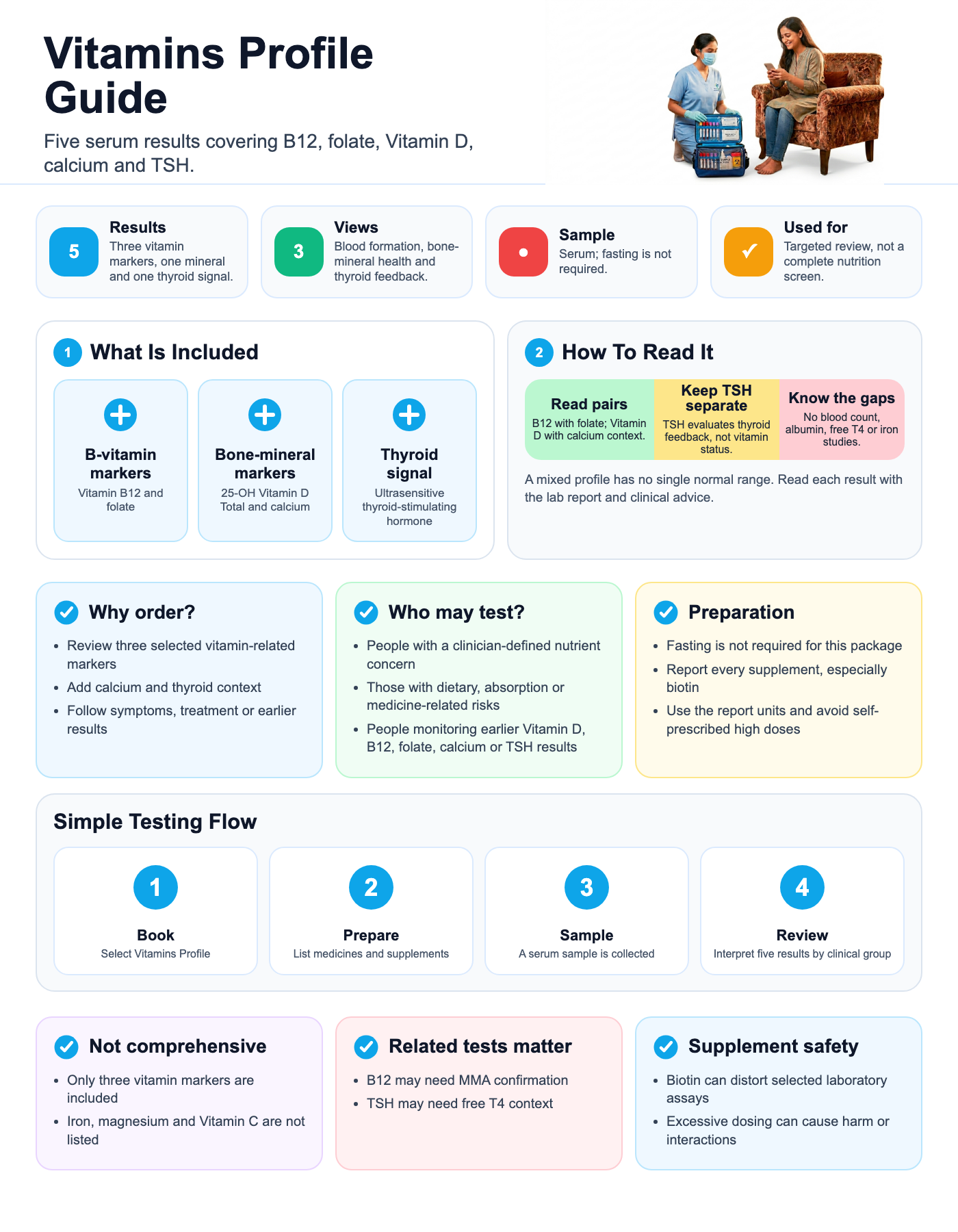
Vitamins Profile visual guide

Vitamins Profile Reference Guide

  • This profile contains five serum results across three different clinical groups.
  • Vitamin B12, folate and total 25-OH Vitamin D are the included vitamin markers.
  • Calcium is a mineral result, while ultrasensitive TSH reflects thyroid–pituitary feedback.
  • The package does not provide one overall nutrition score or a complete deficiency screen.
  • Interpret each result with symptoms, diet, medicines, supplements and related laboratory tests.

Why This Test Is Ordered

Understand exactly what is included
  • The package reports Vitamin B12, folate and total 25-OH Vitamin D.
  • It also reports total serum calcium and ultrasensitive thyroid-stimulating hormone.
  • Calcium is a mineral measurement rather than a vitamin measurement.
  • TSH is a hormone signal used to evaluate thyroid feedback.
  • The five results answer different questions and do not form one score.
  • Vitamin C, other B vitamins, magnesium and iron markers are not listed.
  • Read the package composition before treating it as a complete vitamin assessment.
  • No single result represents overall dietary quality or total micronutrient status.
Read Vitamin B12 and folate together
  • Vitamin B12 supports nervous-system function, DNA synthesis and healthy red-cell formation.
  • Folate also supports DNA production, cell division and normal red-cell development.
  • Deficiency of either nutrient can contribute to megaloblastic anaemia.
  • Vitamin B12 deficiency can cause neurological symptoms even without obvious anaemia.
  • High folic-acid intake can improve anaemia while an underlying B12 problem continues.
  • A blood count helps show whether cell size and haemoglobin are affected.
  • Borderline B12 may require methylmalonic acid or another confirmatory marker.
  • Folate treatment should not begin before a possible B12 deficiency is considered.
Connect Vitamin D with calcium context
  • Total 25-OH Vitamin D is the main blood marker used for Vitamin D status.
  • Vitamin D supports calcium absorption and normal bone mineralisation.
  • Serum calcium is tightly regulated and does not measure calcium stored in bones.
  • Total calcium includes both protein-bound calcium and the free ionised fraction.
  • Albumin can change total calcium without producing the same change in active calcium.
  • Abnormal calcium may need albumin-aware interpretation or ionised calcium testing.
  • Vitamin D and calcium provide related clues but cannot diagnose bone disease alone.
  • Parathyroid hormone, phosphate and kidney function may explain an abnormal mineral pattern.
Use TSH as a thyroid feedback signal
  • The pituitary releases TSH to regulate thyroid-hormone production.
  • An overactive thyroid often suppresses TSH through normal feedback.
  • An underactive thyroid often raises TSH when the pituitary response is intact.
  • TSH alone may not explain pituitary disease, pregnancy effects or acute illness.
  • An unusual TSH commonly needs free T4 and sometimes thyroid-antibody context.
  • Thyroid symptoms overlap with anaemia, nutrient problems and many other conditions.
  • The TSH result should remain separate from conclusions about vitamin status.
  • Thyroid medicine timing and recent dose changes belong in the interpretation history.
Use patterns without overdiagnosing
  • Fatigue can occur with B12, folate, thyroid, sleep and numerous medical problems.
  • Muscle symptoms can relate to Vitamin D, calcium, thyroid or non-laboratory causes.
  • One flagged value does not identify the cause of a deficiency or imbalance.
  • Normal results do not exclude unmeasured nutrients, blood disorders or endocrine conditions.
  • Trends are most helpful when units, methods and treatment timing are comparable.
  • The clinician may add targeted tests instead of repeating the entire package.
  • Treatment should address the confirmed cause rather than the package name alone.
  • Reference intervals describe populations and do not replace an individual clinical decision.

Symptoms And Who Should Test

People with fatigue or neurological symptoms
  • Persistent fatigue, weakness or pallor may prompt anaemia and nutrient assessment.
  • Numbness, tingling, balance difficulty or memory changes can accompany B12 deficiency.
  • A sore tongue or mouth changes may occur with B12 or folate deficiency.
  • These symptoms are non-specific and need broader clinical assessment.
  • This package does not include a complete blood count or iron studies.
  • Neurological B12 effects can occur before anaemia becomes obvious.
  • Rapidly worsening weakness, walking difficulty or confusion needs prompt assessment.
  • Iron deficiency can produce similar fatigue and requires separate ferritin or iron studies.
People with bone or muscle concerns
  • Bone pain, muscle weakness or fracture risk may prompt Vitamin D evaluation.
  • Low calcium can cause tingling, cramps or spasms when clinically significant.
  • High calcium can accompany thirst, constipation, frequent urination or confusion.
  • Vitamin D and calcium results do not replace bone-density testing when indicated.
  • Kidney, parathyroid and digestive conditions can alter mineral balance.
  • The package does not include albumin, phosphate, magnesium or parathyroid hormone.
  • Severe spasms, seizures, confusion or irregular heartbeat needs urgent care.
  • Persistent bone symptoms may require imaging, examination or bone-density assessment.
People with dietary or sunlight risks
  • Strict vegan diets lack natural animal-derived sources of Vitamin B12.
  • Vegetarian diets may require attention to B12 intake and fortified foods.
  • Low dietary variety can affect folate and other nutrients not measured here.
  • Limited sunlight, covered skin and low dietary intake can affect Vitamin D status.
  • Body size, skin pigmentation and season can influence Vitamin D interpretation.
  • Diet history remains important even when the measured results are within range.
  • Testing should answer a defined concern rather than replace balanced nutrition advice.
  • Fortified foods and supplement use can substantially change measured B12 and Vitamin D.
People with absorption or medicine risks
  • Pernicious anaemia can prevent normal absorption of Vitamin B12.
  • Stomach or intestinal surgery can alter B12, folate and Vitamin D absorption.
  • Coeliac, Crohn’s and fat-malabsorption conditions can affect selected nutrient levels.
  • Long-term metformin or acid-suppressing treatment can contribute to B12 concerns.
  • Antiseizure medicines can affect folate, Vitamin D or thyroid interpretation in some people.
  • Calcium, Vitamin D, lithium and diuretics can influence calcium-related interpretation.
  • Medicine changes should be made only with the treating clinician’s advice.
  • Older age can increase B12 risk through reduced food-bound vitamin absorption.
People monitoring treatment or earlier results
  • Repeat testing can assess response after a confirmed deficiency and treatment plan.
  • Bring previous reports showing units, dates, doses and testing laboratories.
  • Record supplement start dates because blood levels can rise before symptoms resolve.
  • TSH response often follows a clinician-defined interval after thyroid treatment changes.
  • Vitamin D follow-up timing depends on baseline, dose, absorption and clinical purpose.
  • Unchanged symptoms despite corrected results may require a different diagnostic approach.
  • Do not increase doses simply because improvement seems slower than expected.
  • A monitoring plan should name the target result and expected treatment response.

Preparation And Interpretation Notes

Follow the verified collection instruction
  • Fasting is not required for the five results in this Vitamins Profile.
  • Follow stricter instructions if another test in the booking requires fasting.
  • A trained professional collects blood and the laboratory prepares serum.
  • Maintain ordinary food and fluid habits unless the clinician advises otherwise.
  • Do not prolong fasting or overdrink water to influence a result.
  • Tell the collector about fainting, difficult draws or blood-thinning medicines.
  • Minor discomfort or bruising can follow a routine venous blood draw.
  • Check package instructions again when collection is combined with other profiles.
Report supplements and biotin
  • List multivitamins, B-complex products and single-nutrient supplements with their doses.
  • Mention Vitamin D, calcium, folic acid and Vitamin B12 injections or tablets.
  • Hair, skin and nail products often contain substantial amounts of biotin.
  • High biotin intake can distort some TSH and 25-OH Vitamin D assays.
  • Ask the laboratory how to handle biotin before collection for its exact methods.
  • Do not stop prescribed biotin or other treatment without clinical advice.
  • Share the product label when the ingredients or doses are uncertain.
  • Record the last dose time because recent exposure can help explain results.
Share medicines and health context
  • List prescription, non-prescription and herbal products before interpretation.
  • Mention metformin, acid suppressants, antiseizure treatment and thyroid medicine.
  • Report lithium, diuretics, calcium antacids and medicines affecting bone metabolism.
  • Pregnancy can change thyroid interpretation and increases the importance of folate planning.
  • Recent acute illness can temporarily affect thyroid results and appetite.
  • Share digestive disease, surgery, kidney disease and parathyroid history.
  • Never stop a medicine merely to obtain a preferred laboratory number.
  • Report recent thyroid imaging, pregnancy status and any diagnosed endocrine condition.
Interpret each result with related tests
  • Use the units and reference interval printed on the current laboratory report.
  • Vitamin B12 may need methylmalonic acid when the serum result is borderline.
  • Folate should be reviewed beside Vitamin B12 and a complete blood count.
  • An unusual TSH often needs free T4 and clinical thyroid assessment.
  • Unexpected total calcium may need albumin or ionised calcium measurement.
  • Vitamin D methods and decision thresholds can differ between laboratories and guidelines.
  • One combined package cannot replace condition-specific diagnostic testing.
  • Compare trends from the same laboratory when practical because assay methods differ.
Act safely on abnormal findings
  • Do not start high-dose supplements solely from an online interpretation.
  • Excess Vitamin D can raise calcium and cause harmful complications.
  • Folic acid alone can obscure blood signs of untreated B12 deficiency.
  • Calcium supplements can interact with medicines and may be inappropriate for some conditions.
  • Thyroid medicine dosing requires clinical review rather than self-adjustment.
  • Confirm unexpected results when supplements, illness or laboratory interference is possible.
  • Seek timely care for severe neurological, cardiac, muscular or confusion symptoms.
  • Use supplements only at a dose appropriate for the confirmed problem.

Frequently Asked Questions

What does Vitamins Profile include?

It includes Vitamin B12, folate, total 25-OH Vitamin D, calcium and ultrasensitive TSH.

Is every result a vitamin?

No; calcium is a mineral and TSH is a thyroid hormone signal.

Is fasting required?

No; fasting is not required unless another booked test needs it.

Does this profile include a blood count?

No; a complete blood count is not among the five listed results.

Can biotin affect these results?

Yes; high biotin intake can interfere with selected thyroid and Vitamin D assays.

Can normal calcium prove healthy bones?

No; blood calcium does not measure calcium stored in bone.

Can TSH diagnose every thyroid problem?

No; free T4 and clinical context may also be required.

Can borderline B12 need another test?

Yes; methylmalonic acid may help confirm an uncertain B12 result.

Can I book home collection?

Home collection is available where the entered address is serviceable.

When should I repeat this package?

Repeat timing depends on the abnormal result, treatment and clinical plan.

Who should interpret my report?

A clinician should review each result with symptoms, medicines and related tests.

Test Conducted By

Rs. 3288
Rs. 2055 38% Off
Home Sample Collection Available No Extra Charges
You will Save Rs. 1233 on this Test
CAP Accredited NABL Accredited UKAS Management Systems ANAB Accredited

Why Choose Thyrocare for Vitamins Profile

Get tested for Vitamins Profile at fully automated diagnostic laboratory Thyrocare which has Centralized Processing Lab (CPL)
for esoteric tests and Regional Processing Labs in major cities of India.

Home Based Diagnostics

Home Based & Quality Diagnostics
at an Unbeatable Price


Carefully designed Panels to provide you with the most vital information for your health.

Convenient Home Based

Affordable — Book Online

Certified Labs — NABL, CAP, ISO

Graphical Reports Online

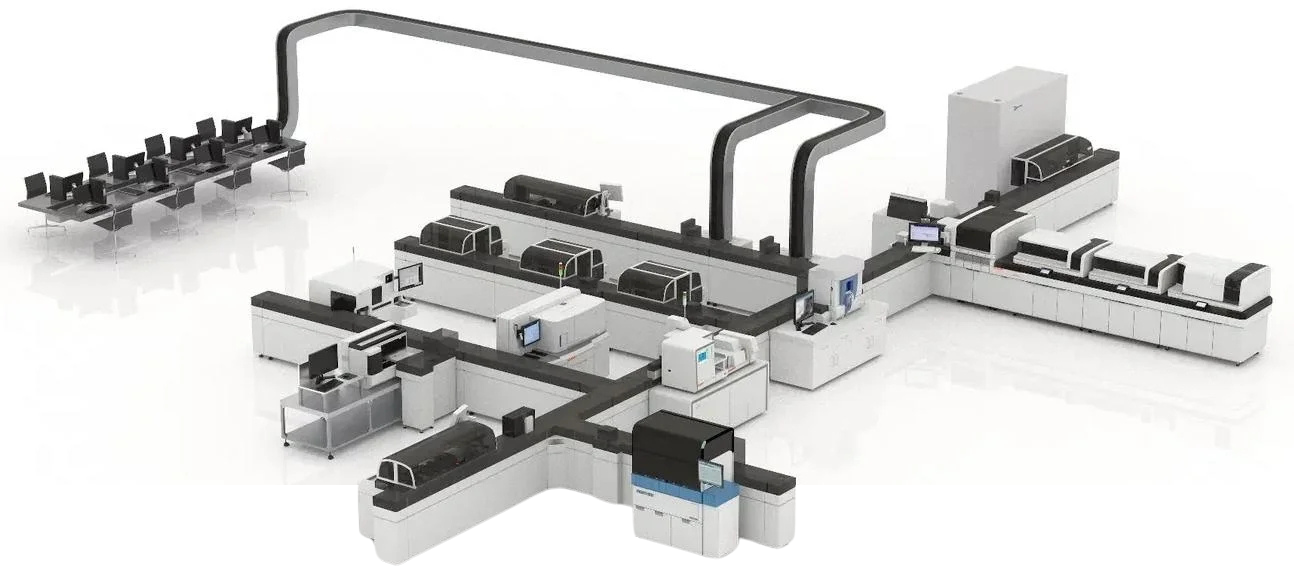
World's largest laboratory track automation

Thyrocare Technologies Limited has huge set up covering over 2 Lakh sq. ft. floor area ensures zero error processing if approx 50 thousand
specimens and over 3 lakh Clinical investigations per day is the right choice for your Vitamins Profile testing.

Aptio Automation

Aptio Automation

Similar Test & Packages WELLNESS
Aarogyam A Pro - Package Aarogyam B Pro - Package Aarogyam C Pro Package Aarogyam C Pro With Heart Attack Risk Package Aarogyam D Pro Package Aarogyam E Pro Package Aarogyam F Pro Package Aarogyam Female Panel Aarogyam Lite Package Aarogyam Male Package Aarogyam Mini Aarogyam Stree - Package

Ratings & Reviews

4.8 ★★★★★

Based on verified bookings

Good service

Sample collection was smooth and reports were delivered on time.