Allergy Food Panel 1 (by Phadia)
Testing 10 Parameters
- Fasting Not Required
- Sample Type: SERUM SPL
Rs. 10320 Rs. 6450
| Conducted at | Thyrocare Labs |
| Lab Accreditation | CAP, NABL, ICMR, NGSP, ISO |
| Method | MicroArray |
| Technology | ELISA |
| Supervision | Dr. Prachi Sinkar MD (PATH), DR. Caesar Sengupta MD (MICRO) |
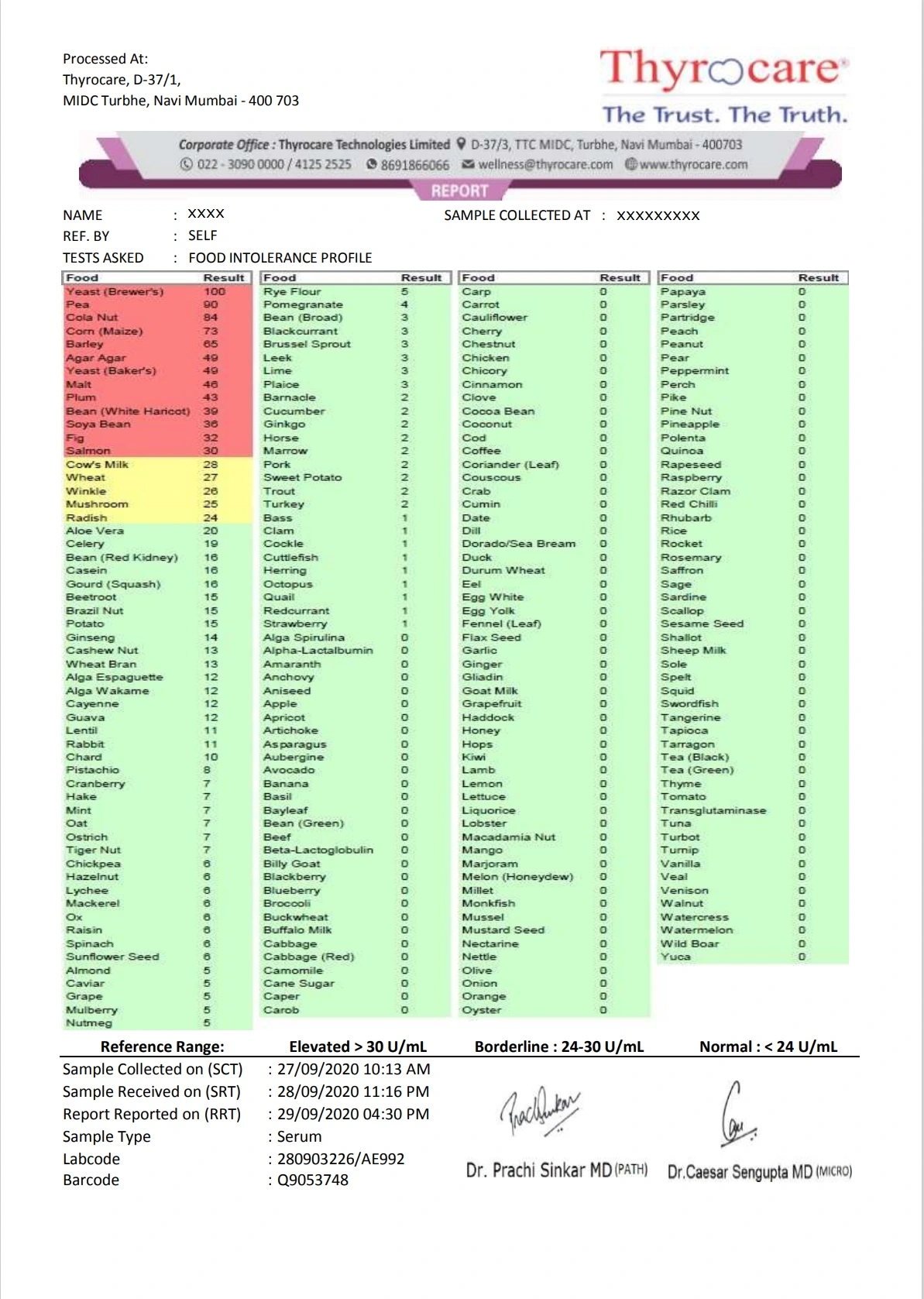
| Normal Range | < 24 U/mL |
| Borderline Range | 24-30 U/mL |
| Elevated Range | > 30 U/mL |
| Results | Highly Specific |
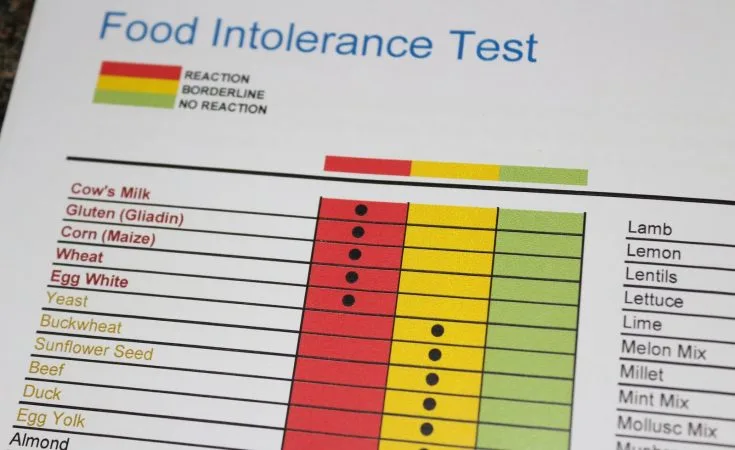
How do I interpret the Food intolerance test results?
The test results show a list of foods categorized into 3 parts:-
1. The foods listed in the red color are the foods you need to eliminate from your diet. These are the foods that cause intolerance at the highest level.
2. Foods listed in the yellow section are the foods that you can include occasionally or in small doses in your diet.
3. The green section of the report includes a list of food that you eat regularly and that causes no intolerance at all.
| Conducted at | Thyrocare Labs |
| Lab Accreditation | CAP, NABL, ICMR, NGSP, ISO |
| Method | MicroArray |
| Technology | ELISA |
| Supervision | Dr. Prachi Sinkar MD (PATH), DR. Caesar Sengupta MD (MICRO) |
| Normal Range | < 24 U/mL |
| Borderline Range | 24-30 U/mL |
| Elevated Range | > 30 U/mL |
| Results | Highly Specific |
How do I interpret the Food intolerance test results?
The test results show a list of foods categorized into 3 parts:-
1. The foods listed in the red color are the foods you need to eliminate from your diet. These are the foods that cause intolerance at the highest level.
2. Foods listed in the yellow section are the foods that you can include occasionally or in small doses in your diet.
3. The green section of the report includes a list of food that you eat regularly and that causes no intolerance at all.
Food Intolerance happens when the body develops a sensitivity towards certain foods due to the inability to digest them. This inability may happen due to more than one reason such as Celiac disease, lack of digestive enzymes, psychological dysfunction, or irritable bowel syndrome. Food intolerance can happen in any person irrespective of their age.
Why do you get suddenly intolerant?
The sudden intolerance in the body can happen due to both physical and psychological factors. Irritable bowel syndrome, celiac, and absence or shortage of digestive enzymes can cause sudden food intolerance. Apart from that, psychological problems such as depression, anxiety, and stress could also impact the digestive system by making it weak and sensitive to specific foods.
How can you recover?
The first step towards recovery is to spot the symptoms and get a food intolerance test done at the earliest. Based on the test results, you need to make dietary changes and completely avoid foods that are causing intolerance. Gradually, your gut health will improve and you can then reintroduce some foods occasionally and in less quantity. To make your recovery process much more efficient and smoother, you may consult a doctor.
It is better to solve a health problem rather than live with it for years and wait for it to become severe. With a food intolerance test done, you can get clarity about the foods that are causing intolerance and making your digestive system weak & sensitive. With the help of the reports, you may also consult a doctor and make changes in your diet to take charge of your health.
Living with food intolerance could cause several health problems such as diarrhea, headaches, bloating, gas, stomach pain, skin problems, etc. These problems could be due to various kinds of foods such as milk, cheese, wheat, bread, nuts, and seafood. Doing just a gluten intolerance test or lactose intolerance test may not help because it will not provide a complete list of foods that you are intolerant to. Only by doing a complete food intolerance test, you will benefit with regard to improving your digestive system and overall health.
When it comes to health, we make sure to treat every customer with care and compassion. We understand the importance of tests that can help people in improving their health. For this reason, the price of food intolerance test in Jammu is Rs. 6800/-. If you choose to do the food intolerance test with us, it will prove to be cost-effective along with a test procedure that is done by following standard guidelines.
The decision to choose a lab must be taken after doing proper research about them. It is important to make sure that the lab that you choose has a strong guideline and standard procedures to follow. Additionally, it must have certifications from CAP, ISO, and NABL that could speak for its authenticity and professionalism.
Apart from that, it is important to note that the prices of all the lab testing differs according to location and other factors. You must see that the lab you choose should have economical prices for its test. In terms of health, economic price should be an important thing to consider.
Before the test, you must make sure to prepare yourself to get accurate results. It is necessary to read the instructions while booking the test and if you still have doubts, our team of professionals can help clear them for you. There are some common prerequisites before the test that are given below:
Fasting – Although, fasting is not, before the food intolerance test it is necessary to not consume any spicy, junk, or oily foods. Apart from that, it is necessary to consume as much water as you can. Other drinks such as alcohol, carbonated drinks and sweetened drinks should also be avoided. Try to consume only simple homemade food to get accuracy in your results.
Medications – If you are on medication for a disease, you must consult our experts or a doctor before doing the test. There are certain medications that you may need to avoid before the test as they can affect the results negatively.
Food intolerance is caused due to sensitivity toward certain foods and the digestive system is affected by it. As a result, the person suffers from diarrhea, bloating, constipation, abdominal pain and other digestion-related issues. The symptoms of food intolerance take time to appear and are not severe or need immediate medical aid.
Whereas, food allergy is a severe dysfunction that attacks the immune system. The symptoms of food allergy appear immediately and the person requires medical attention at the earliest. The symptoms of food allergy are itching, skin rashes, swelling of eyes, face, and lips, sneezing, abdominal pain, diarrhea, etc.
You can book the test on the website of Mediyaar by filling out the form that is given there. The form contains particulars like name, address, pin code, email, appointment slot, and time. Make sure to fill in all the details correctly to avoid inconvenience. There’s an option for a hardcopy report in the form that you can select if you require the same. Now you can submit the form and proceed to payment.
A sudden food intolerance can happen with anyone irrespective of their age. Usually, the cause behind the development of this health problem is a lack of digestive enzymes, psychological disturbance, irritable bowel syndrome, and celiac disease.
Some major food intolerances that most people suffer from are related to dairy products, gluten, seafood, and some kinds of nuts. Foods that could cause intolerance are milk, cheese, butter, almonds, cashews, sunflower seeds, fish, beef and different kinds of fruits and vegetables. Some people might also have an intolerance from caffeinated drinks such as coffee.
Anyone who’s experiencing symptoms such as bloating, excess, gas, headaches, constipation, itching, and skin rashes should take the test at their earliest convenience. A person with these symptoms irrespective of their age can take the test to manage the symptoms and improve their health.
Understanding the report of food intolerance test is really simple. The reports provide an examination of IgG antibodies and an increased level of the same indicates intolerance. Apart from that, there is a list of foods in the report that are color-coded in red, yellow, and green. The food that are under in red must be avoided completely as they are causing you the highest intolerance. The yellow-coded foods are the one that you can consume in small amounts, occasionally. And the green coded foods can be taken regularly without worry.
The levels of IgG antibodies are measured in the Food Intolerance Test. If the levels of your IgG do not fall within the normal range, then it is advised to take a doctor’s consultation and make the necessary changes in your diet. The test also provides a report with a detailed list of foods divided into three categories with a color code of red, yellow and green. They indicate the foods that need to be avoided completely and the foods that can be consumed regularly or occasionally.
Sample collection was smooth and reports were delivered on time.
SEO city links for users comparing this test across active Mediyaar service cities.
| City | Mediyaar Price | Page |
|---|---|---|
| Coimbatore | Rs. 7600 | Food Intolerance Profile in Coimbatore |
| Erode | Rs. 7600 | Food Intolerance Profile in Erode |
| Kolkata | Rs. 7600 | Food Intolerance Profile in Kolkata |
| Lucknow | Rs. 7600 | Food Intolerance Profile in Lucknow |
| Bargarh | Rs. 7600 | Food Intolerance Profile in Bargarh |
| Secunderabad | Rs. 7600 | Food Intolerance Profile in Secunderabad |
| Faridabad | Rs. 7600 | Food Intolerance Profile in Faridabad |
| Vadodara | Rs. 7600 | Food Intolerance Profile in Vadodara |
| Madurai | Rs. 7600 | Food Intolerance Profile in Madurai |
| Guwahati | Rs. 7600 | Food Intolerance Profile in Guwahati |
| Ahmedabad | Rs. 7600 | Food Intolerance Profile in Ahmedabad |
| Bhopal | Rs. 7600 | Food Intolerance Profile in Bhopal |