Choose your City

Urine Protein Creatinine Ratio

Urine Protein Creatinine Ratio is available for online booking with home sample collection.

Urine Protein Creatinine Ratio

Urine Protein Creatinine Ratio : Info - Procedure

Test Price
Rs. 400 (Tax included)

List of test included in Urine Protein Creatinine Ratio


  • Creatinine - urine
  • Protein - urine
  • Urine protein creatinine ratio

Urine Protein Creatinine Ratio Sample Report Format & Ranges

View the Urine Protein Creatinine Ratio sample report in the original Thyrocare PDF format. Customer name, contact details, address, barcode, order ID and lead ID are masked on the public sample copy.

Exact Thyrocare PDF preview will show here after a masked sample PDF is attached to this report.

The searchable values below support visitors looking for Urine Protein Creatinine Ratio report format, sample report values, normal range and reference range information.

Conducted at Thyrocare Labs
Lab Accreditation CAP, NABL, ICMR, NGSP, ISO
Reference Range < 5.7
Results Highly specific

Urine Protein Creatinine Ratio Reference Range Table

Parameter Unit Reference Range Method Report Section
HbA1c % < 5.7
AVERAGE BLOOD GLUCOSE (ABG) mg/dL 90-120
FASTING BLOOD SUGAR(GLUCOSE) mg/dL 70-100
URINARY MICROALBUMIN µg/mL < 25

Urine Protein Creatinine Ratio Report Sections Covered

Report Section Parameters in Sample Report
Toxic Elements 22
Diabetes 4
Other Counts 1
Complete Hemogram 28
Vitamin 2
Elements 1
Iron Deficiency 4
Lipid 10
Liver 12
Metabolic 1
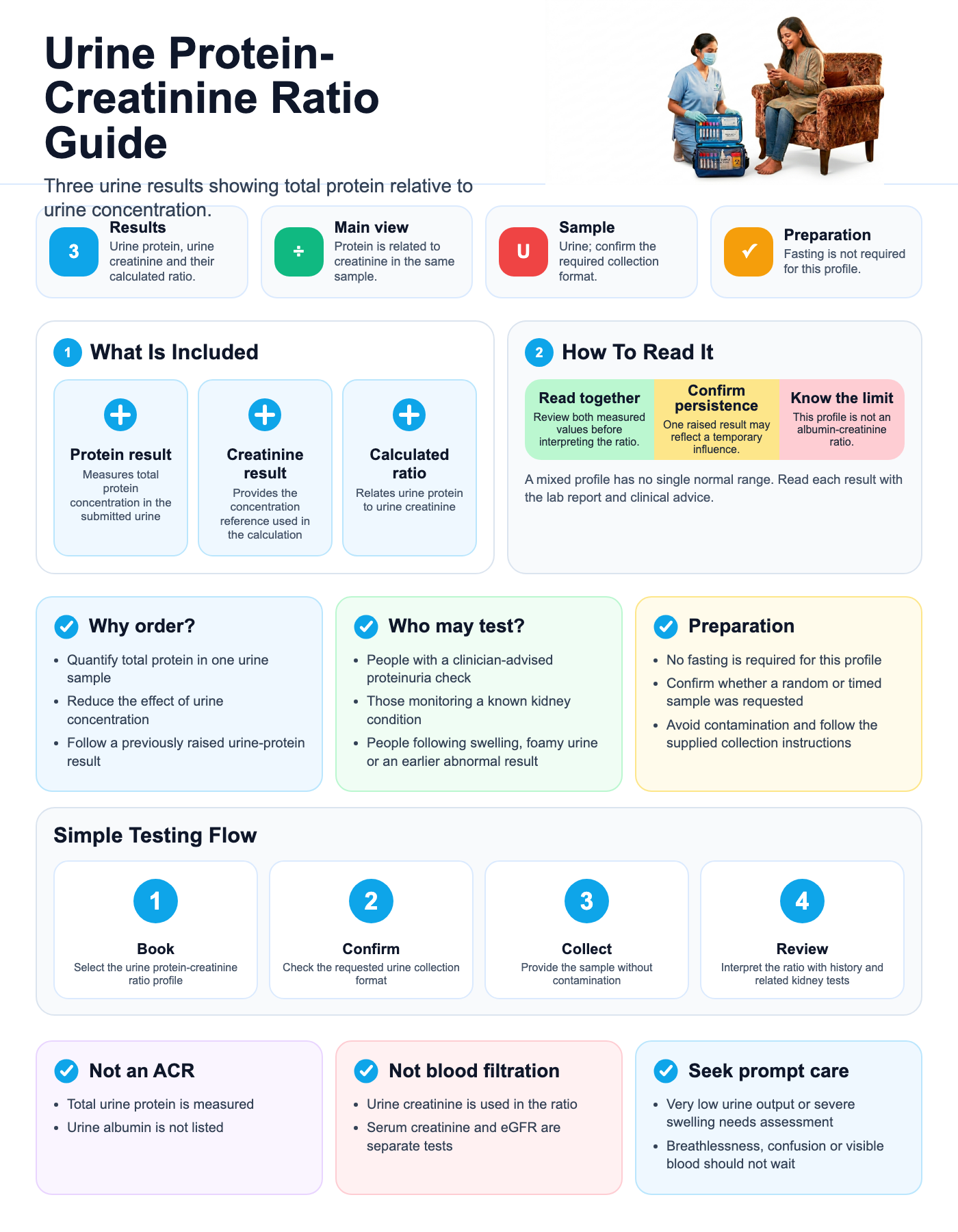
Urine Protein Creatinine Ratio visual guide

Urine Protein-Creatinine Ratio Reference Guide

  • This profile reports urine protein, urine creatinine and a calculated protein-creatinine ratio.
  • The ratio adjusts protein for the concentration of the submitted urine sample.
  • It estimates protein loss but does not identify the protein type or disease cause.
  • Urine albumin, serum creatinine and estimated GFR are not included in this profile.
  • Collection format, temporary influences and previous results matter during interpretation.

Why This Test Is Ordered

Understand the three reported results
  • Urine protein measures the total protein concentration present in the submitted sample.
  • Urine creatinine measures creatinine concentration in that same urine sample.
  • The laboratory calculates the ratio from the two measured concentrations.
  • The ratio relates protein to creatinine rather than creating a third measurement.
  • A concentrated sample can show higher raw concentrations than a dilute sample.
  • Relating protein to creatinine reduces, but does not remove, collection variability.
  • Review all three rows together because each explains part of the calculation.
Estimate urine protein loss more conveniently
  • A protein-creatinine ratio can estimate protein loss without every person collecting urine all day.
  • The estimate is useful because urine concentration changes with fluid balance and collection timing.
  • A ratio from one sample can roughly approximate a longer urine protein collection.
  • The approximation is not identical to directly measuring every urine sample over 24 hours.
  • Some clinical questions still require a timed collection or another specialised urine study.
  • Use the collection type requested by the clinician rather than choosing one independently.
  • The current package listing confirms urine but does not name a specific collection schedule.
Recognise what total protein can indicate
  • Healthy kidneys normally keep most large blood proteins out of the urine.
  • Persistent excess urine protein can accompany damage affecting the kidney filtering barrier.
  • Tubular conditions can increase protein when filtered proteins are not adequately reabsorbed.
  • Some blood disorders create excess smaller proteins that can enter the urine.
  • Inflammation or bleeding within the urinary tract may also increase measured protein.
  • The ratio quantifies a finding but cannot identify which mechanism produced it.
  • Further testing is selected from symptoms, history, examination and the complete report.
Distinguish PCR from albumin testing
  • This profile measures total urine protein rather than urine albumin alone.
  • An albumin-creatinine ratio specifically relates urine albumin to urine creatinine.
  • Albumin testing is generally preferred for detecting lower levels of kidney-related protein loss.
  • Total protein testing may remain useful when substantial or non-albumin protein is suspected.
  • A normal protein-creatinine ratio does not automatically replace indicated albumin testing.
  • The listed three results do not include a separate urine albumin measurement.
  • Ask which ratio answers the clinical question before comparing reports or thresholds.
Support follow-up without diagnosing alone
  • Repeated ratios can show whether protein loss is stable, improving or increasing.
  • Trend comparisons work best when collection conditions and laboratory units remain similar.
  • One raised result may follow exercise, dehydration, stress, fever or another temporary influence.
  • Persistent protein requires clinical assessment even when the person feels well.
  • A ratio cannot show kidney size, scarring, stones, infection or urinary obstruction.
  • Diagnosis may require blood tests, urine albumin, microscopy, cultures, imaging or specialist studies.
  • Treatment decisions should follow the underlying diagnosis rather than the ratio alone.

Symptoms And Who Should Test

People following an earlier protein finding
  • A positive dipstick or raised urine protein result may lead to quantitative follow-up.
  • The ratio provides more context than a protein concentration viewed without urine concentration.
  • Unexpected findings often need confirmation after temporary influences and contamination are reviewed.
  • Bring the earlier report so units, collection type and size of change can be compared.
  • A clinician may prefer an early-morning sample when confirming persistent protein loss.
  • Do not assume every repeat uses the same collection method or reporting unit.
  • Follow the requested timing because the reason for repeating the test matters.
People with known kidney disease
  • Protein trends may help monitor some diagnosed kidney conditions alongside other measurements.
  • Kidney monitoring commonly also considers blood pressure, serum creatinine and estimated GFR.
  • Urine albumin may be required because this package measures total protein instead.
  • Medicines and treatment changes can alter the monitoring plan and repeat interval.
  • A stable ratio does not replace review of symptoms, blood results and medicine safety.
  • Use the clinician-defined target because universal goals do not fit every kidney condition.
  • Sudden changes deserve assessment rather than waiting for the next routine schedule.
People with diabetes or high blood pressure
  • Diabetes and high blood pressure increase the risk of chronic kidney disease.
  • Kidney damage can develop before obvious urinary or general symptoms appear.
  • Guidelines usually prefer urine albumin-creatinine ratio for early kidney-risk assessment.
  • This total protein ratio should not be mistaken for the recommended albumin-specific test.
  • Serum creatinine with estimated GFR adds information about blood filtration performance.
  • Testing frequency depends on diagnosis, treatment, previous results and the clinician’s plan.
  • Ask whether this profile or an albumin-specific test matches the intended screening purpose.
People with symptoms needing kidney assessment
  • Persistent foamy urine can occur with protein loss but is not diagnostic by appearance.
  • Swelling around the eyes, feet or ankles has kidney and non-kidney causes.
  • Changed urination, fatigue, nausea or itching may justify broader clinical assessment.
  • Urine protein results cannot identify the cause of swelling or changed urination.
  • Urinalysis, urine culture, blood tests or imaging may be needed for other causes.
  • Very low urine output, severe swelling or breathlessness requires prompt medical attention.
  • Visible blood, confusion, persistent vomiting or severe weakness should not await routine results.
People in special clinical situations
  • Pregnancy-related protein assessment follows obstetric guidance and blood-pressure findings.
  • Children need age-appropriate interpretation rather than an adult reference interval.
  • Muscle mass and creatinine excretion can affect how a ratio behaves between individuals.
  • Urinary bleeding or genital contamination can falsely increase measured protein.
  • Selected blood disorders may require urine electrophoresis or immunofixation instead of this ratio alone.
  • Acute illness can change protein excretion and may alter the appropriate testing schedule.
  • Tell the clinician about pregnancy, age, known disorders and the reason for testing.

Preparation And Interpretation Notes

Confirm the required collection format
  • Fasting is not required for the three results in this profile.
  • The current package listing confirms a urine specimen without naming its collection schedule.
  • Ask whether the request is for random, early-morning, timed or 24-hour urine.
  • Do not substitute one collection format for another without checking first.
  • A timed collection requires every instructed sample within the stated period.
  • A single-sample request should not be poured from an unrequested 24-hour collection.
  • Follow the laboratory’s container, volume, labelling, storage and return instructions.
Collect a clean urine sample
  • Wash and dry your hands before opening the supplied urine container.
  • Avoid touching the container interior or the inside of its lid.
  • Use the clean-catch steps when the laboratory specifically requests that method.
  • Keep stool, toilet paper, water and cleaning products out of the container.
  • Close the lid firmly after collecting the requested amount of urine.
  • Label and return the sample exactly as instructed by the collection service.
  • Report a spill, missed timing or collection mistake instead of concealing it.
Reduce avoidable temporary influences
  • Strenuous exercise can temporarily increase urine protein in otherwise healthy people.
  • Dehydration, fever, stress and acute illness can also influence protein excretion.
  • Maintain ordinary hydration unless a clinician has given different fluid instructions.
  • Do not overdrink water in an attempt to produce or dilute the sample.
  • Mention recent hard exercise, fever, vomiting, diarrhoea or reduced fluid intake.
  • Do not stop prescribed medicines simply to change a urine result.
  • The clinician can decide whether temporary factors justify a later confirmation sample.
Prevent blood or secretion contamination
  • Menstrual blood can raise measured urine protein and complicate interpretation.
  • Visible urinary bleeding can also increase protein in the submitted sample.
  • Tell the laboratory about menstruation, genital bleeding, discharge or recent procedures.
  • Ask whether collection should proceed, use extra precautions or be rescheduled.
  • Semen and prostatic secretions may interfere with some urine protein measurements.
  • Never alter the sample after collection to remove visible blood or material.
  • Record possible contamination so an unexpected result can be assessed fairly.
Interpret the report safely
  • Use the reference interval and units printed by the performing laboratory.
  • Protein-creatinine ratios may be reported in mg/g, mg/mmol or other unit conventions.
  • Do not compare numbers directly when the units or collection formats differ.
  • Review urine protein and urine creatinine before interpreting the calculated ratio.
  • Urine creatinine here is a denominator, not a blood kidney-function measurement.
  • One unusual ratio may need repeat testing before persistent proteinuria is concluded.
  • A clinician should combine the result with history and any related kidney tests.

Frequently Asked Questions

What does this profile measure?

It reports urine protein, urine creatinine and their calculated protein-creatinine ratio.

Is fasting required?

No; fasting is not required for this urine profile.

Is this the same as an albumin-creatinine ratio?

No; this profile measures total protein and does not list urine albumin.

Does the ratio measure kidney filtration?

No; serum creatinine and estimated GFR assess blood filtration separately.

Can exercise affect urine protein?

Yes; strenuous exercise can temporarily increase urine protein.

Can menstruation affect the sample?

Yes; menstrual blood may contaminate urine and raise measured protein.

Does one high result confirm kidney disease?

No; temporary influences and persistent findings require clinical review.

Should I collect random or early-morning urine?

Use the exact collection format requested by the laboratory or clinician.

Can I book home collection?

Home collection is available where urine collection service is offered.

When should I repeat the ratio?

Repeat timing depends on the result, temporary influences and clinical purpose.

Who should interpret my report?

A clinician should review it with symptoms, history and related kidney tests.

Test Conducted By

Rs. 640
Rs. 400 38% Off
Home Sample Collection Available No Extra Charges
You will Save Rs. 240 on this Test
CAP Accredited NABL Accredited UKAS Management Systems ANAB Accredited

Why Choose Thyrocare for Urine Protein Creatinine Ratio

Get tested for Urine Protein Creatinine Ratio at fully automated diagnostic laboratory Thyrocare which has Centralized Processing Lab (CPL)
for esoteric tests and Regional Processing Labs in major cities of India.

Home Based Diagnostics

Home Based & Quality Diagnostics
at an Unbeatable Price


Carefully designed Panels to provide you with the most vital information for your health.

Convenient Home Based

Affordable — Book Online

Certified Labs — NABL, CAP, ISO

Graphical Reports Online

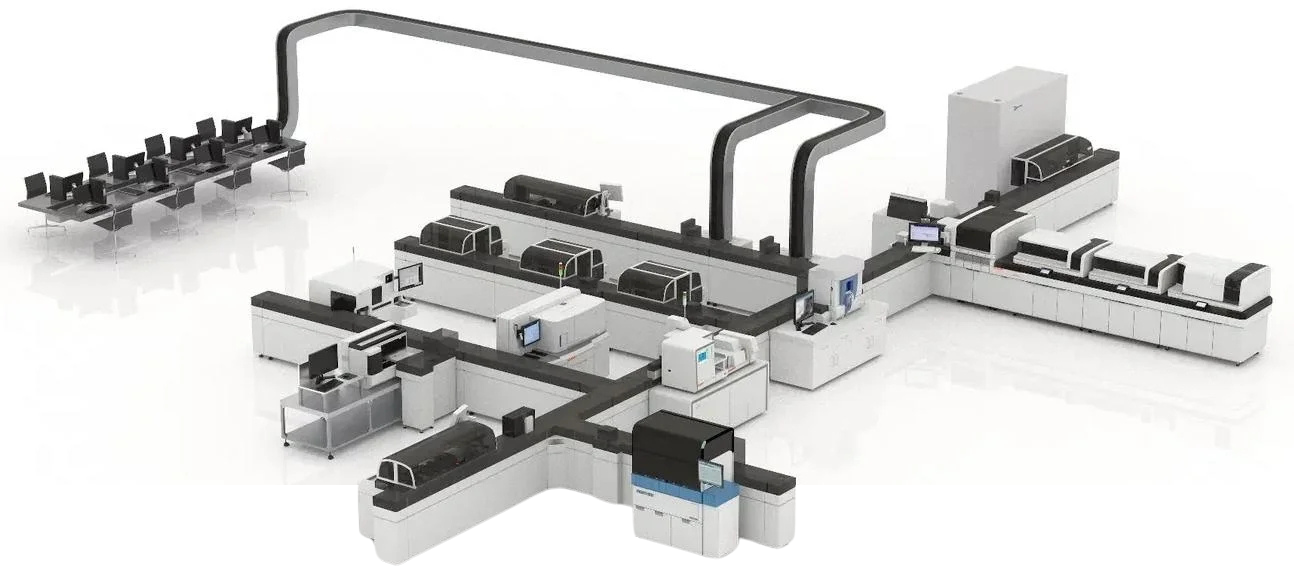
World's largest laboratory track automation

Thyrocare Technologies Limited has huge set up covering over 2 Lakh sq. ft. floor area ensures zero error processing if approx 50 thousand
specimens and over 3 lakh Clinical investigations per day is the right choice for your Urine Protein Creatinine Ratio testing.

Aptio Automation

Aptio Automation

Similar Test & Packages RENAL
Urine Electrolytes

Ratings & Reviews

4.8 ★★★★★

Based on verified bookings

Good service

Sample collection was smooth and reports were delivered on time.