Choose your City

Widal Blood Test

Widal Test by Thyrocare includes test on 4 Tests parameters. It comprises of essential tests on Fever for an early detection of any potential illness in your body. This package which comes under WELLNESS category was originally priced at Rs 264, is now available at a discounted price of Rs. 264

Widal Test is a blood test which includes 4 Tests that can help confirm or rule out whether a fever is due to a typhoid infection.


Widal : Info - Procedure

Test Price
Rs. 264 (Tax included)
Group Name
WELLNESS
Fasting
Sample Type
SERUM
Sample Collection
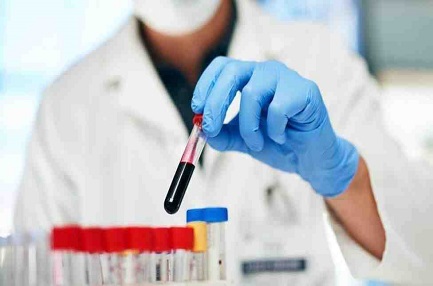
Expert collect samples at Home
Reports
Delivered Online within 24-48 Hrs*
Report type
Email & Hardcopy ( On request )

List of test included in Widal


  • Salmonella paratyphi – a (h)
  • Salmonella paratyphi – b (h)
  • Salmonella typhi - o

View More

Widal Sample Report & Ranges

Conducted at Thyrocare Labs
Lab Accridition CAP, NABL , ICMR , NGSP, ISO
Method COMPETITIVE ENZYME IMMUNOASSAY
TECHNOLOGY E.L.I.S.A
Supervision Dr Sachin Patil MD(Path)
Normal AMH Levels
Results Highly specific

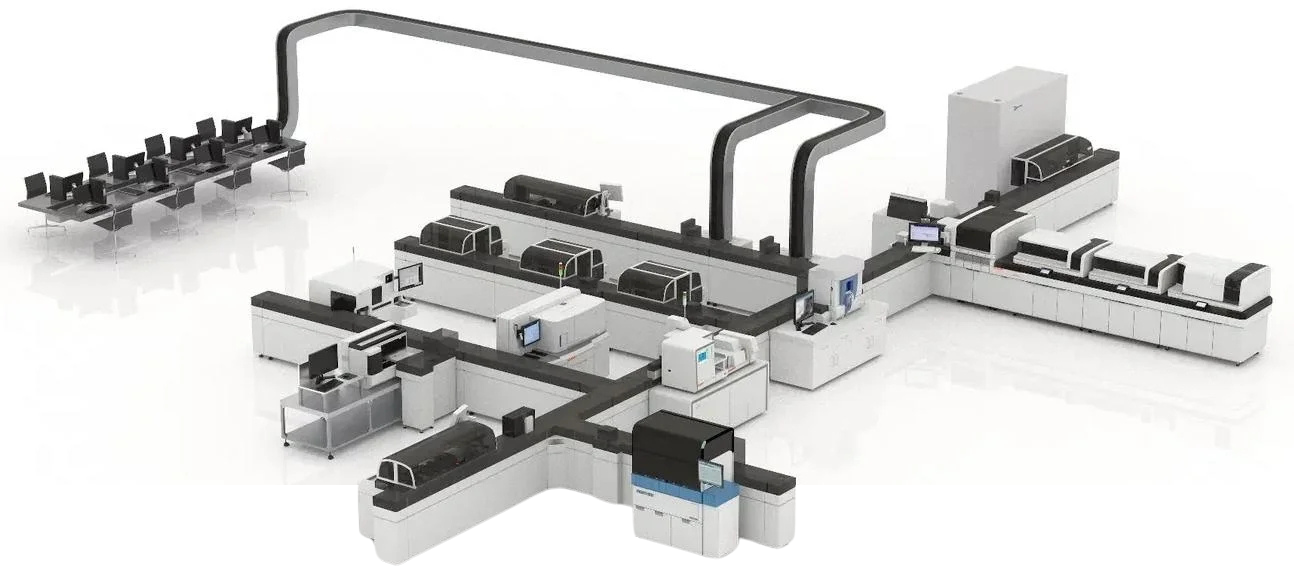
Our labs work 365 days / 24 x 7 to ensure your Widal test samples reach us the same night, before midnight. We are equipped with (MUT) - India's first preanalytical barcoded vial sorter, Sample Sorter & Aptio (Siemens).

Our IT-enabled barcoded bi-directional operating systems & world-class air logistics process your blood samples within the specified time with the utmost accuracy. Once your specimen for Widal test is collected by our phlebotomist, Your reports will be sent to your email id within 24 to 48 hours. For hard copy requests, the reports would be delivered in 3 to 5 days. You will be informed via SMS & email once we process your report.
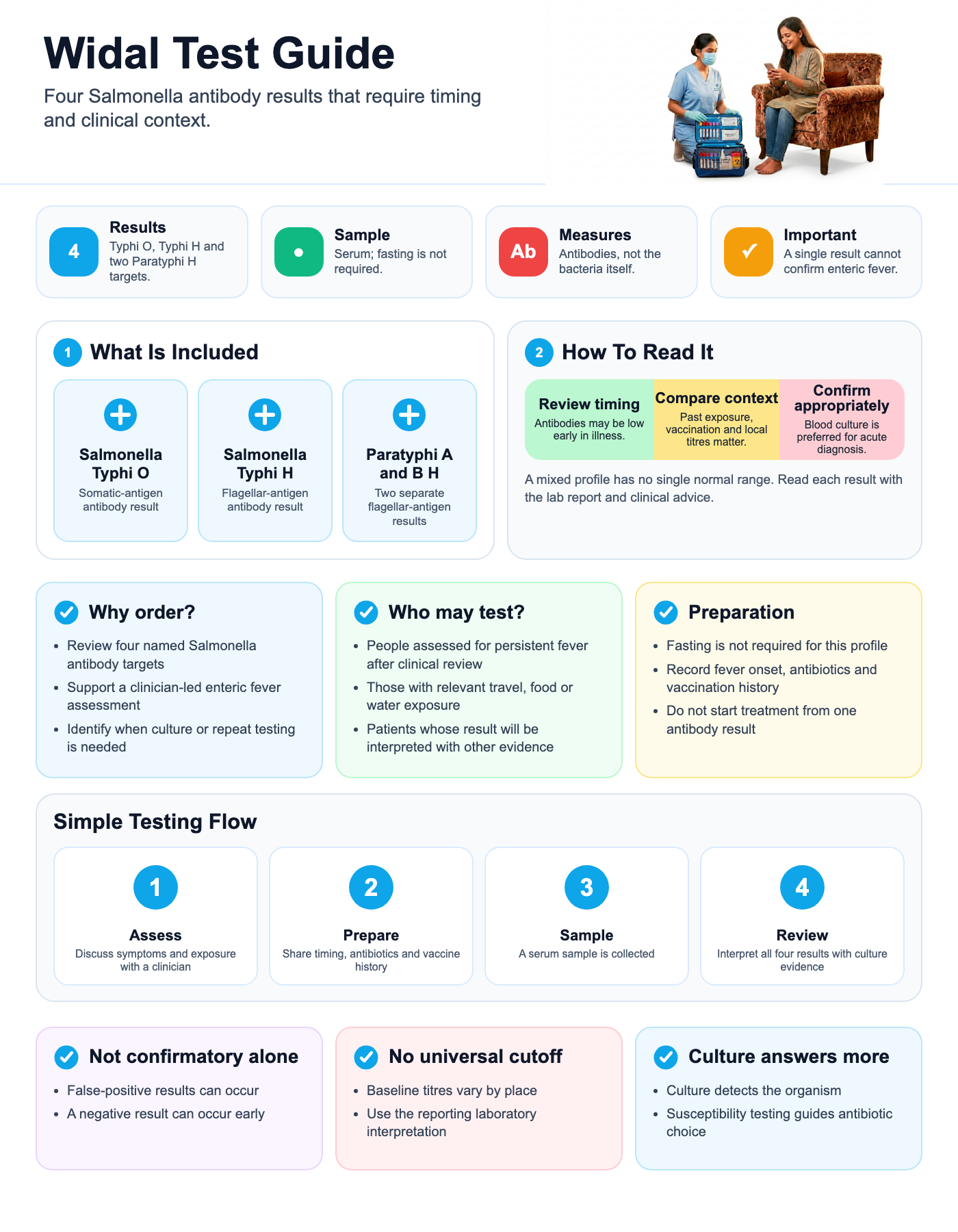
Widal visual guide

Widal Test Reference Guide

  • Widal reports four serum antibody results linked to Salmonella Typhi and Salmonella Paratyphi antigens.
  • The profile includes Typhi O, Typhi H, Paratyphi A H and Paratyphi B H targets.
  • It measures an immune response and does not directly detect living bacteria in the blood.
  • One result cannot reliably confirm or exclude acute enteric fever.
  • Interpretation requires illness timing, local baseline titres, vaccination, previous exposure, antibiotics and preferably culture evidence.

Why This Test Is Ordered

Understand the four-antigen profile
  • The profile reports four antibody results from one serum sample.
  • Salmonella Typhi O represents an antibody response to a somatic antigen.
  • Salmonella Typhi H represents an antibody response to a flagellar antigen.
  • Salmonella Paratyphi A H is reported as a separate flagellar target.
  • Salmonella Paratyphi B H is also reported as a separate target.
  • The profile does not include Paratyphi A O or Paratyphi B O.
  • It does not include a blood culture, stool culture or molecular test.
  • Each reported target must be interpreted separately and in context.
Know what the antibody result represents
  • Widal assesses antibodies that can react with selected Salmonella antigens.
  • The report may express reactivity as titres or another laboratory-defined format.
  • Antibodies reflect immune recognition rather than direct bacterial detection.
  • A reactive result can follow current infection, earlier exposure or vaccination.
  • Cross-reacting antibodies can also produce a result unrelated to acute enteric fever.
  • Background antibody levels differ between populations and geographic settings.
  • A laboratory flag is therefore not the same as a confirmed diagnosis.
  • Symptoms and microbiological evidence determine the result’s practical meaning.
Understand false-positive and negative results
  • Widal has important sensitivity and specificity limitations in clinical practice.
  • False-positive results occur often enough that CDC does not recommend the test.
  • Past infection can leave antibodies after the acute illness has resolved.
  • Typhoid vaccination can influence antibody interpretation in some people.
  • Other Salmonella strains and cross-reactive antigens can affect measured reactivity.
  • Early illness may produce a negative result before antibodies have risen.
  • Previous antibiotic treatment can alter illness evolution and diagnostic yield.
  • Neither a reactive nor non-reactive result should be used alone.
Place the result on the illness timeline
  • Antibody responses do not appear immediately when fever begins.
  • WHO guidance describes O antibodies emerging around days six to eight.
  • H antibodies may appear later, around days ten to twelve.
  • Exact timing varies and cannot date an infection precisely.
  • An early sample may be non-reactive despite genuine enteric fever.
  • Paired acute and convalescent samples can show whether titres changed significantly.
  • A fourfold rise is more informative than one isolated titre when measured comparably.
  • Paired interpretation requires the same method and appropriate collection interval.
Understand why culture remains preferred
  • Blood culture directly seeks Salmonella Typhi or Paratyphi organisms in blood.
  • CDC identifies blood culture as the mainstay of acute enteric fever diagnosis.
  • More than one blood culture may be needed because sensitivity is imperfect.
  • Culture can remain negative, especially after antibiotics or limited bacteremia.
  • A positive culture permits organism identification and antimicrobial susceptibility testing.
  • Widal cannot determine which antibiotic is likely to work.
  • Stool and urine cultures answer different questions and are less sensitive early.
  • The clinician chooses tests according to timing, severity and treatment history.

Symptoms And Who Should Test

People with clinically suspected enteric fever
  • Typhoid and paratyphoid fever can begin gradually with persistent fever.
  • Headache, malaise, chills and muscle aches may accompany the fever.
  • Constipation, diarrhoea, nausea or vomiting can also occur.
  • These symptoms overlap with malaria, dengue and many other infections.
  • Clinical features alone rarely distinguish enteric fever reliably.
  • Testing should follow a clinician’s assessment of symptoms and local disease patterns.
  • Blood culture should be considered before antibiotics when practical and safe.
  • Treatment must not be delayed when severe illness needs urgent care.
People with relevant exposure history
  • Enteric fever spreads through food or water contaminated with human waste.
  • Recent travel to an endemic area can increase the probability of infection.
  • Unsafe drinking water or food-handling exposure may also be relevant.
  • Household or outbreak links can change the clinician’s level of suspicion.
  • Exposure history should include place, dates, meals and known sick contacts.
  • Vaccination lowers typhoid risk but does not provide complete protection.
  • Current typhoid vaccines do not protect against every paratyphoid infection.
  • A risk factor supports assessment but does not confirm the cause of fever.
People with persistent unexplained fever
  • Persistent fever deserves a structured review rather than repeated Widal testing alone.
  • Malaria, dengue, urinary infection and other illnesses may resemble enteric fever.
  • A clinician may request blood counts, cultures or region-specific infection tests.
  • The appropriate investigation depends on age, location, symptoms and exposure.
  • A non-reactive Widal result does not rule out early enteric fever.
  • A reactive result does not eliminate other simultaneous causes of fever.
  • Repeated empirical antibiotics can reduce culture yield and complicate diagnosis.
  • Share all earlier reports so unnecessary duplicate testing can be avoided.
People with previous vaccination or infection
  • Previous typhoid vaccination can contribute antibodies relevant to interpretation.
  • Earlier enteric fever may leave measurable antibodies after recovery.
  • Repeated environmental exposure can raise background titres in endemic communities.
  • One titre cannot reliably separate old exposure from a new infection.
  • Record the vaccine name and approximate administration date when known.
  • Bring previous Widal reports if the same laboratory method was used.
  • A rising paired titre can be more meaningful than persistent stable reactivity.
  • Culture evidence remains important when acute infection is suspected.
People with severe or worsening illness
  • Severe enteric fever can cause gastrointestinal bleeding, encephalopathy or intestinal perforation.
  • Confusion, marked drowsiness or collapse requires urgent medical assessment.
  • Persistent vomiting can cause dehydration and prevent safe oral intake.
  • Severe abdominal pain or blood in stool needs urgent evaluation.
  • Breathing difficulty, shock signs or rapidly worsening weakness also need emergency care.
  • Do not wait for a Widal report when serious warning signs occur.
  • Hospital assessment may include cultures, imaging and supportive treatment.
  • A laboratory result cannot grade severity or predict complications.

Preparation And Interpretation Notes

Follow the verified serum instructions
  • Fasting is not required for the current Widal profile.
  • Follow stricter preparation when another booked test requires fasting.
  • A trained professional collects venous blood and prepares serum for testing.
  • Maintain ordinary meals and fluids unless your clinician advises otherwise.
  • Minor discomfort or bruising can follow a routine blood draw.
  • Tell the collector about fainting, difficult draws or blood-thinning medicines.
  • Do not postpone urgent assessment merely to complete fasting or testing.
  • Confirm instructions again if the booked laboratory or profile changes.
Record fever and exposure timing
  • Write down the first day that fever or other symptoms appeared.
  • Record the highest measured temperature and the pattern across recent days.
  • Note diarrhoea, constipation, abdominal pain, headache, rash or vomiting.
  • List recent travel destinations with arrival and return dates.
  • Mention unsafe water, street food, outbreak or household exposure concerns.
  • Record when any earlier serum or culture sample was collected.
  • Timing helps identify an early sample and plan follow-up testing.
  • Do not alter dates to fit an expected Widal interpretation.
Share antibiotics, vaccines and history
  • List every antibiotic taken during the current illness and its start date.
  • Include partial courses, injections and medicines obtained without a prescription.
  • Antibiotics can reduce blood-culture yield and change diagnostic planning.
  • Report previous typhoid or paratyphoid diagnoses and approximate dates.
  • Share typhoid vaccination history, including the latest dose when known.
  • Bring earlier Widal, culture and susceptibility reports for comparison.
  • Do not stop prescribed treatment without advice from the treating clinician.
  • Never select an antibiotic solely from the Widal antibody pattern.
Read the report without universal cutoffs
  • Review Typhi O, Typhi H, Paratyphi A H and Paratyphi B H separately.
  • Use the units and interpretive comments printed by the reporting laboratory.
  • Significant background titres vary between regions and tested populations.
  • A universal positive cutoff is unsafe for every city and laboratory.
  • Higher reactivity does not automatically prove active bacterial infection.
  • A low or non-reactive result can occur when testing happens early.
  • Paired results are comparable only when collection timing and method are suitable.
  • The clinician should integrate symptoms, exposure, cultures and local epidemiology.
Plan confirmation and safe next steps
  • Ask whether blood cultures are appropriate before starting or changing antibiotics.
  • Culture and susceptibility results can guide organism-specific treatment decisions.
  • A negative culture does not exclude every case, particularly after antibiotics.
  • Alternative fever causes may require targeted blood or imaging investigations.
  • Hydration and clinical monitoring matter while the diagnosis is being clarified.
  • Use safe water, hand hygiene and food precautions to reduce transmission risk.
  • Do not prepare food for others while infectious diarrhoea is being assessed.
  • Follow public-health advice when enteric fever is confirmed or outbreak-linked.

Frequently Asked Questions

What does the Widal profile include?

It includes Typhi O, Typhi H and two Paratyphi H results.

Is fasting required for Widal testing?

No; fasting is not required for this serum profile.

Does Widal directly detect Salmonella bacteria?

No; it measures antibodies reacting with selected Salmonella antigens.

Can one reactive result confirm typhoid?

No; false positives and background antibodies limit single-result interpretation.

Can a negative Widal exclude enteric fever?

No; early illness and other factors can produce negative results.

Why does fever timing matter?

O and H antibody responses may rise at different illness stages.

Can vaccination affect the result?

Yes; previous vaccination can influence antibody interpretation.

Which test is preferred for acute diagnosis?

Blood culture is preferred when acute enteric fever is suspected.

Can I book home collection?

Home collection is available where the entered address is serviceable.

Who should interpret my Widal report?

A clinician should combine it with timing, exposure and culture evidence.

When should I seek urgent care?

Confusion, bleeding, severe pain or collapse needs urgent medical care.

Test Conducted By

Rs. 422
Rs. 264 37% Off
Home Sample Collection Available No Extra Charges
You will Save Rs. 158 on this Test
CAP Accredited NABL Accredited UKAS Management Systems ANAB Accredited

Why Choose Thyrocare for Widal

Get tested for Widal at fully automated diagnostic laboratory Thyrocare which has Centralized Processing Lab (CPL)
for esoteric tests and Regional Processing Labs in major cities of India.

Home Based Diagnostics

Home Based & Quality Diagnostics
at an Unbeatable Price


Carefully designed Panels to provide you with the most vital information for your health.

Convenient Home Based

Affordable — Book Online

Certified Labs — NABL, CAP, ISO

Graphical Reports Online

World's largest laboratory track automation

Thyrocare Technologies Limited has huge set up covering over 2 Lakh sq. ft. floor area ensures zero error processing if approx 50 thousand
specimens and over 3 lakh Clinical investigations per day is the right choice for your Widal testing.

Aptio Automation

Aptio Automation

Similar Test & Packages WELLNESS
Aarogyam A Pro - Package Aarogyam B Pro - Package Aarogyam C Pro Package Aarogyam C Pro With Heart Attack Risk Package Aarogyam D Pro Package Aarogyam E Pro Package Aarogyam F Pro Package Aarogyam Female Panel Aarogyam Lite Package Aarogyam Male Package Aarogyam Mini Aarogyam Stree - Package

Ratings & Reviews

4.8 ★★★★★

Based on verified bookings

Good service

Sample collection was smooth and reports were delivered on time.